A brief history of Le Roy d’Espagne
For more than three centuries, Le Roy d’Espagne has watched over the Grand-Place in Brussels. A look back at the story of an iconic place.
Before Le Roy: a fortress on the square
Long before Le Roy d’Espagne existed, an imposing stone residence stood on this site. It was known as the Serhuyghskintsteen¹, named after the Serhuyghs family, one of the seven patrician lineages that had governed Brussels since the Middle Ages.
Built from the 12th century onwards, this fortified house was a typically Brussels steen: battlements, turrets, thick walls pierced by narrow iron-barred windows, all backed against the old city wall. It would dominate the square for nearly five centuries, until a night in August 1695 changed everything.
1695: Brussels under bombardment
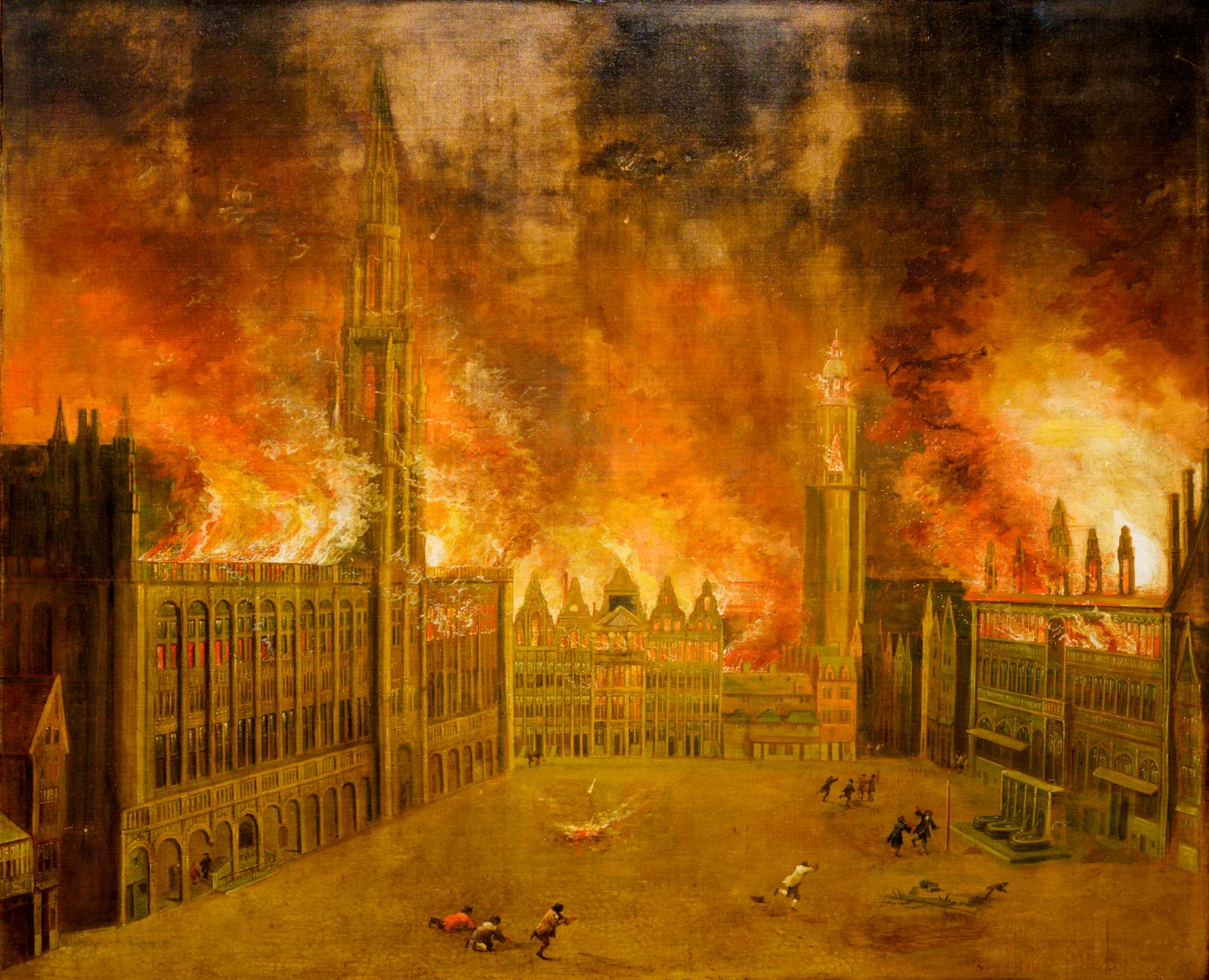
In the midst of the War of the Grand Alliance², Marshal de Villeroy received a brutal order from Louis XIV: bombard Brussels to divert Allied forces from the siege of Namur. On 13 August 1695, the French batteries opened fire from the heights of Molenbeek and Anderlecht, targeting the spire of the Town Hall.
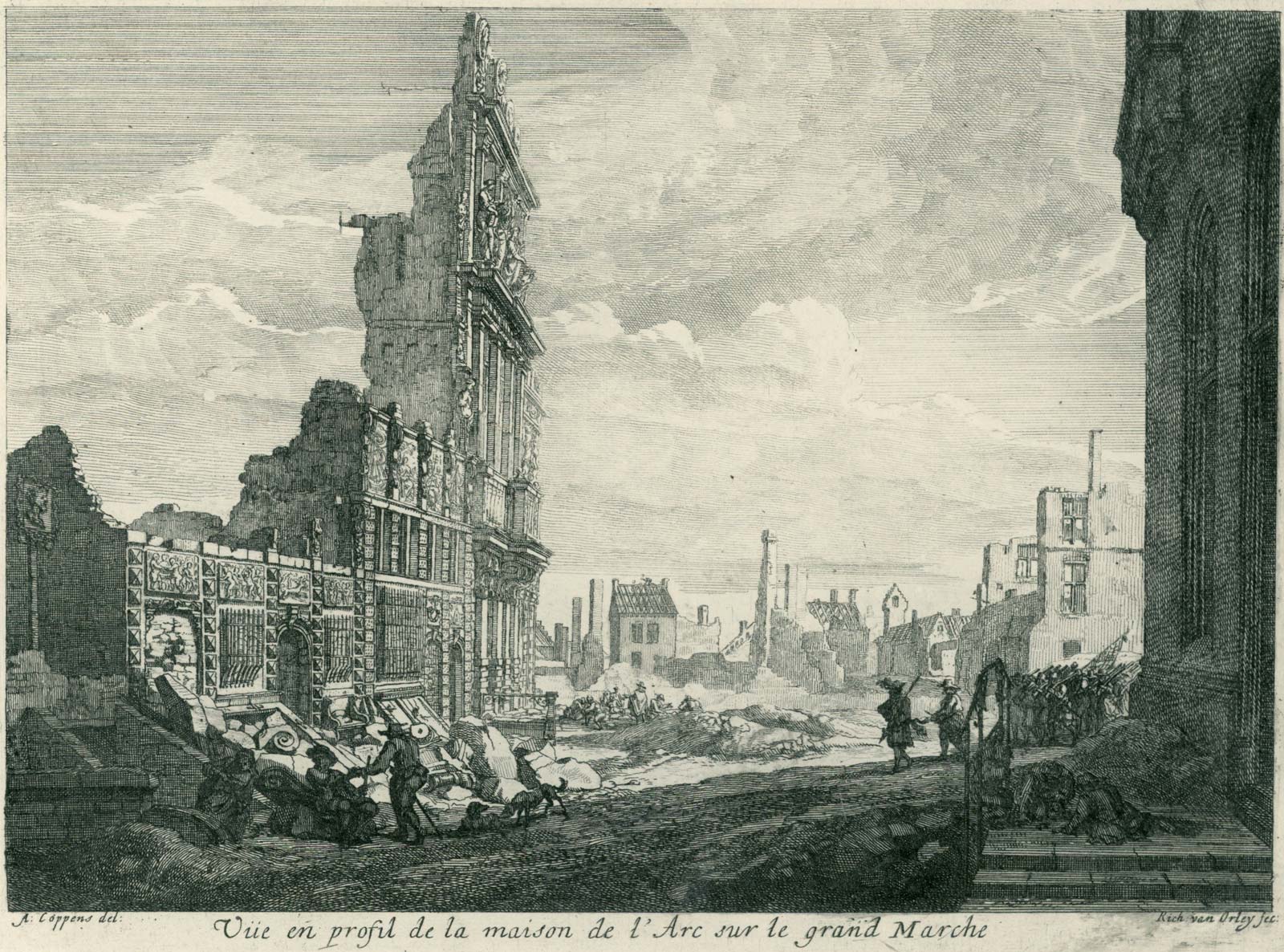
For 48 hours, incendiary bombs and red-hot cannonballs rained down on the city. Nearly 4,000 buildings were destroyed, one third of Brussels reduced to ashes. The Grand-Place was devastated. Guild houses, churches and entire streets disappeared. Ironically, the Town Hall tower, the main target of the bombardment, was one of the few buildings still standing. The Serhuyghs residence did not survive.
But the people of Brussels would not remain on their knees for long. In barely five years, the city rose from its ashes with a speed that astonished all of Europe. The Grand-Place we know today, listed as a UNESCO World Heritage Site, was born from this feverish reconstruction, driven by the trade guilds. The golden phoenix that still stands atop the Maison de la Louve, next door to Le Roy d’Espagne, is its symbol: “Burned, I rose again more glorious”, reads the inscription beneath the statue.
1697: the bakers build their guild house
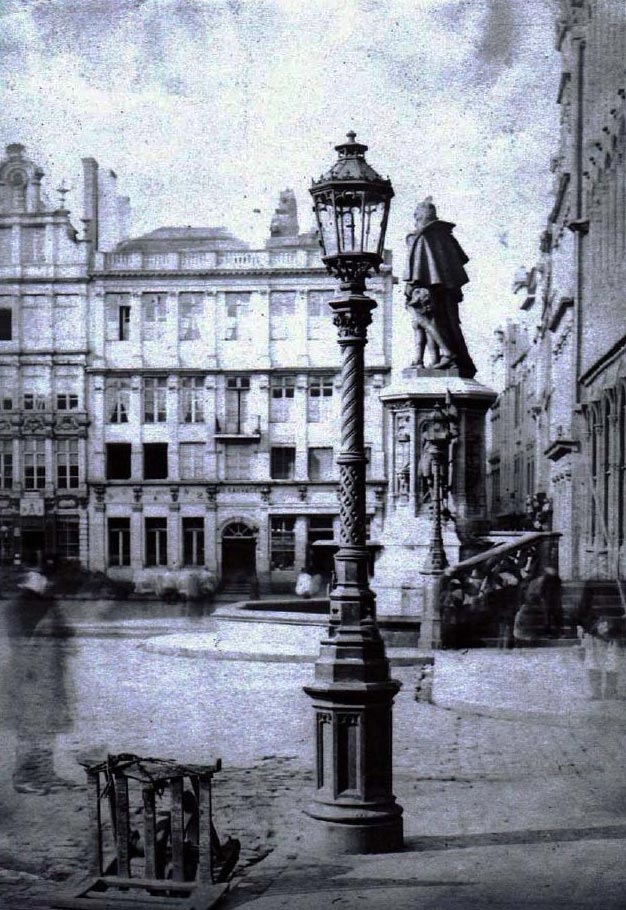
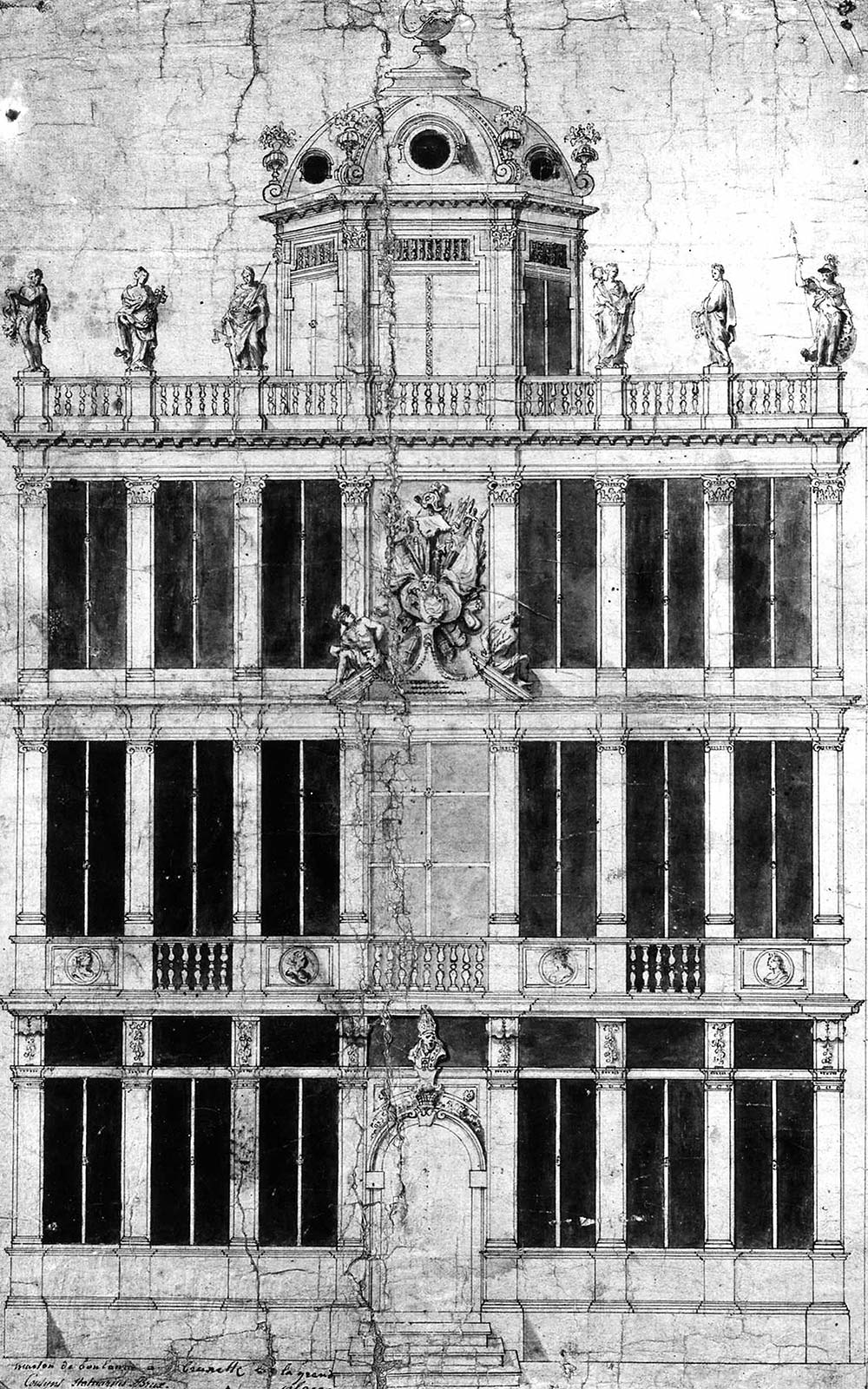
It was in this spirit of renewal that Le Roy d’Espagne came to life. In 1697, the bakers’ guild, one of the wealthiest and most influential in Brussels, had a new guild house erected on the site of the former Serhuyghskintsteen. The architect was probably Jean Cosyn³, to whom several other façades on the square are also attributed.
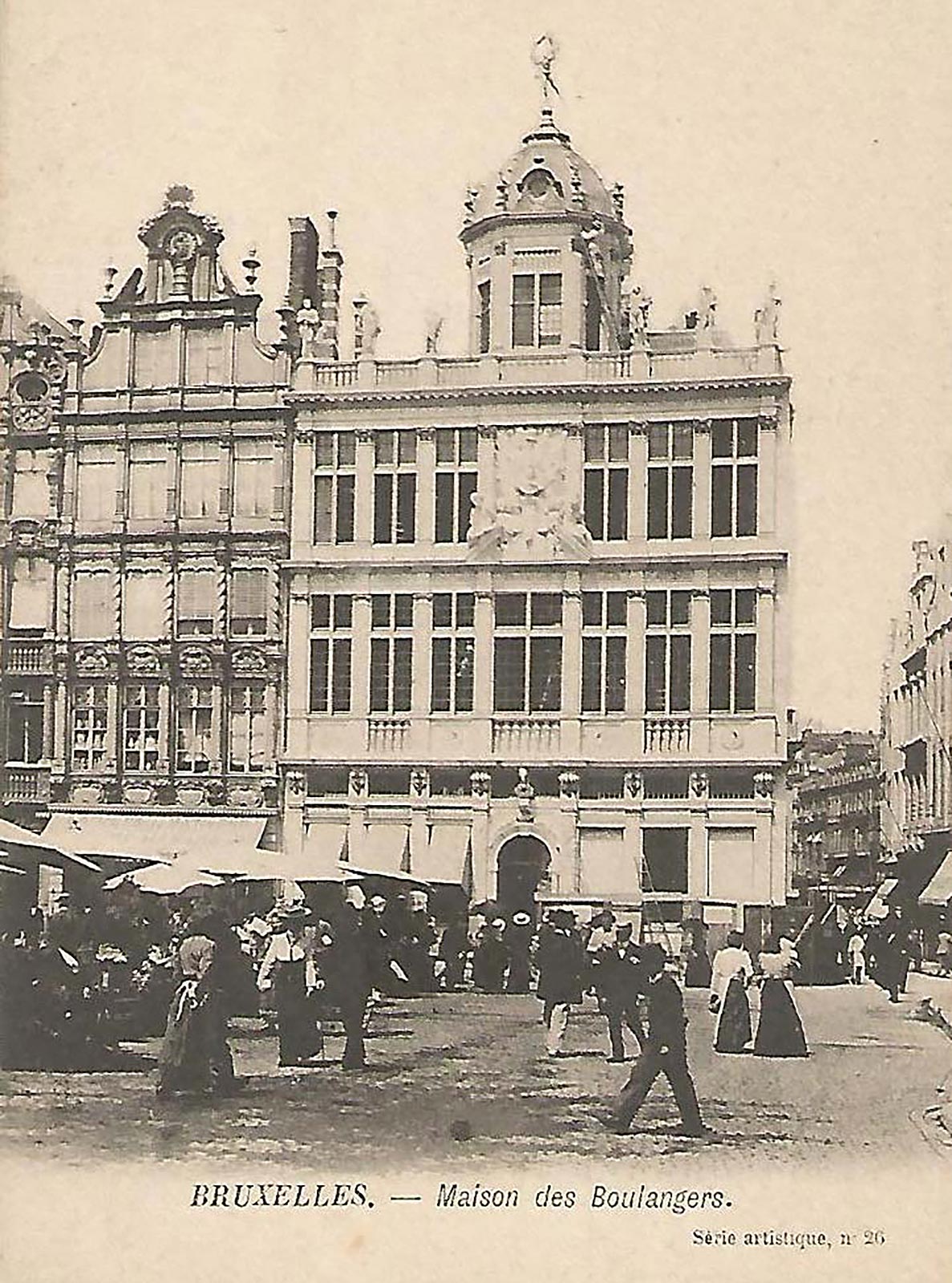
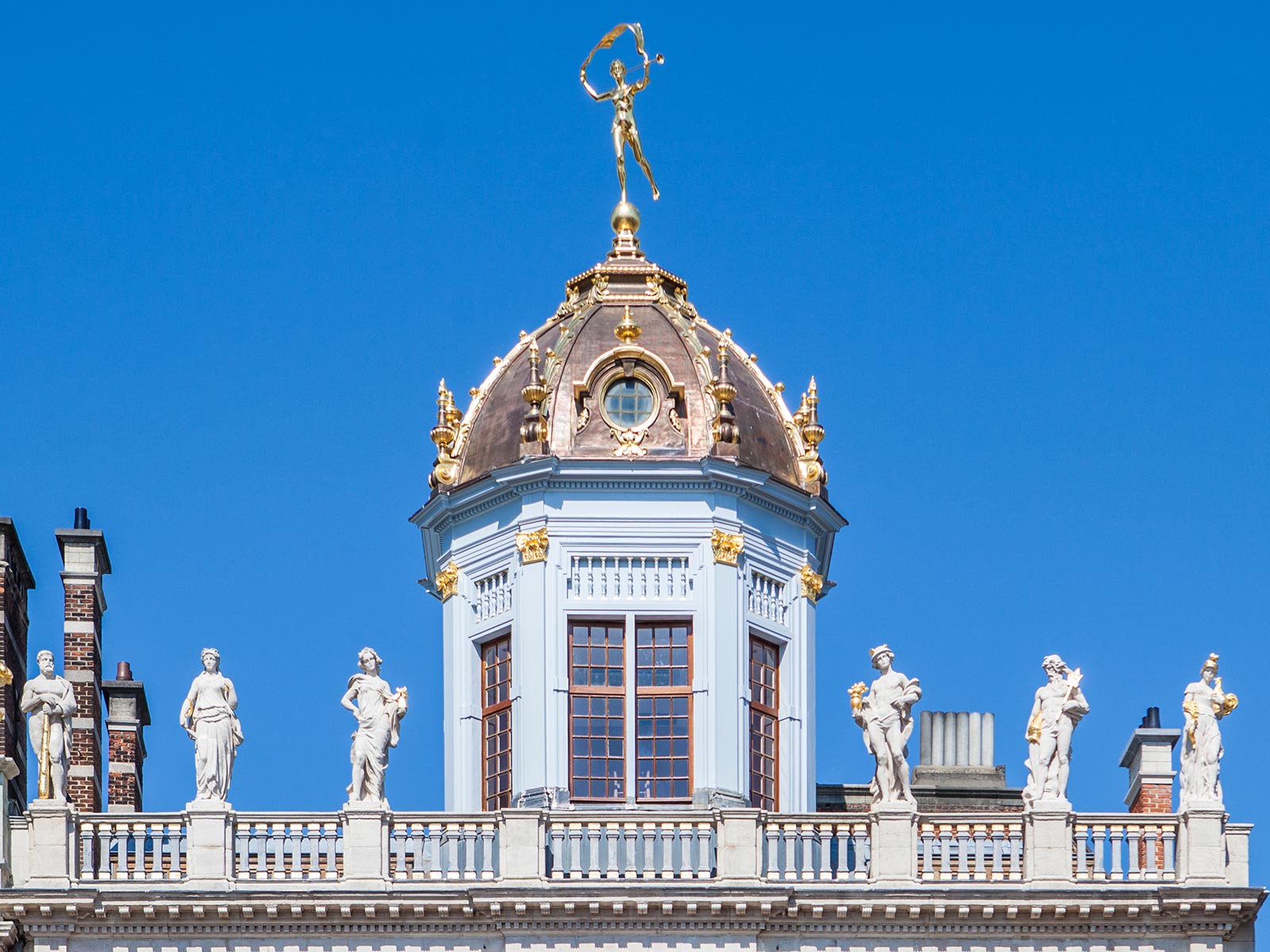
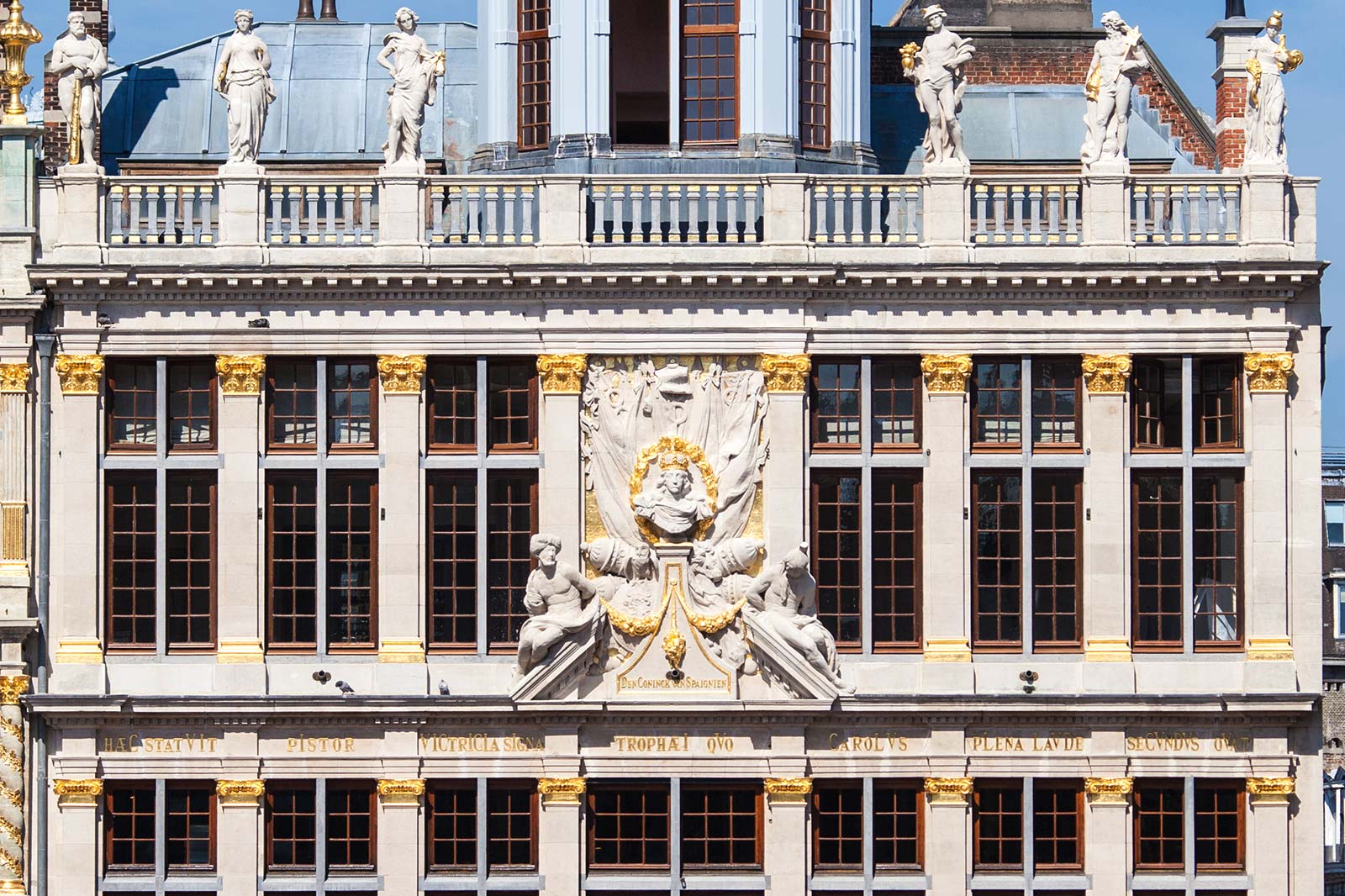
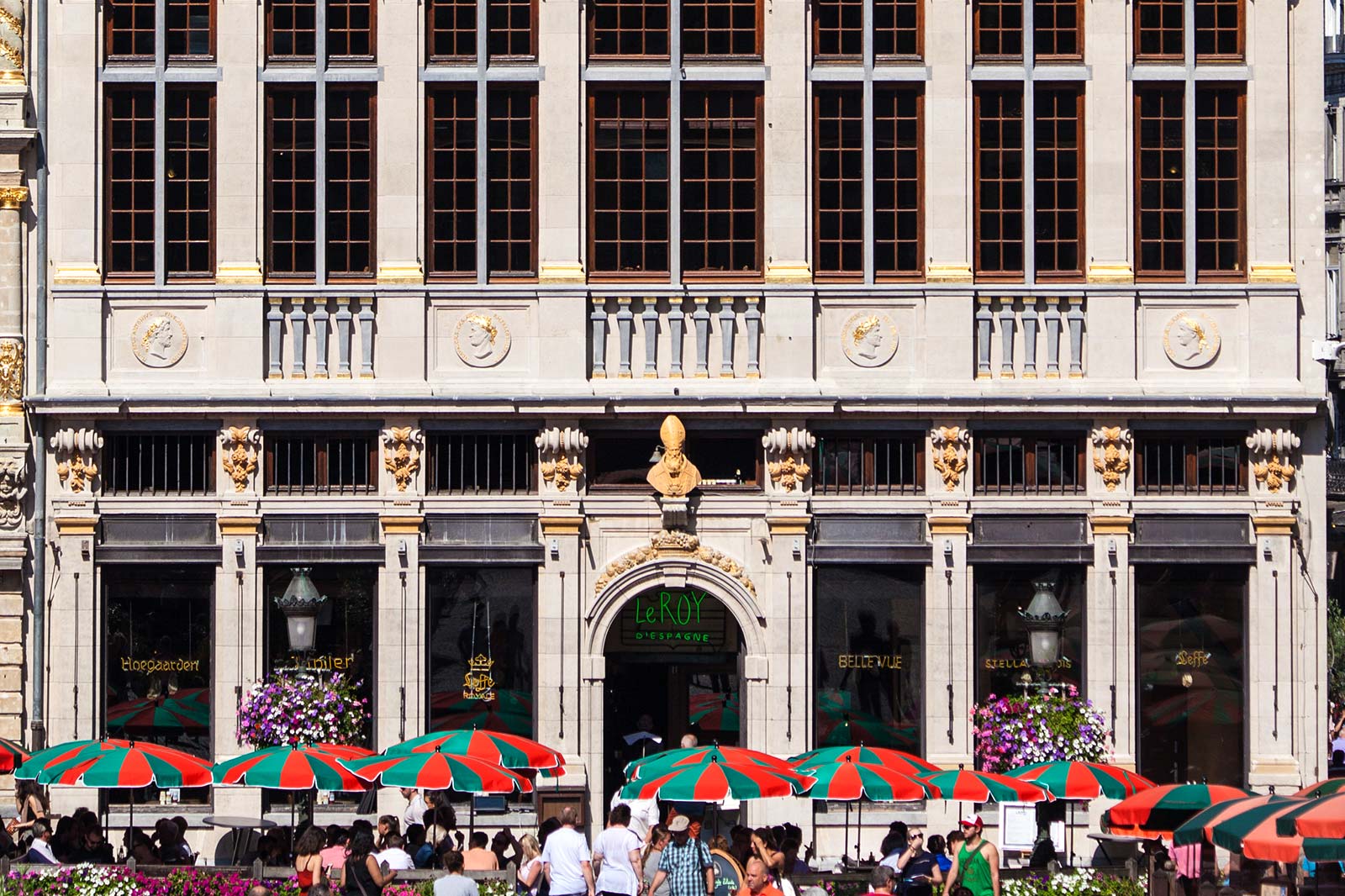
The building impresses with its scale: seven bays of ashlar stonework, making it one of the widest façades on the Grand-Place. It is crowned not with a gable like its neighbours, but with an attic balustrade⁴ topped by an octagonal lantern tower. At the summit, a statue of Fame sounding a trumpet, the work of sculptor Paul Dubois. Two Latin chronograms⁵, composed by Brussels poet Petrus Vander Borcht, are engraved on the façade and confirm the date of construction.
It is the only house on the Grand-Place to bear this distinctive silhouette, which makes it instantly recognisable.
A façade that reads like a book
Every sculptural element on the façade of Le Roy d’Espagne tells a story.
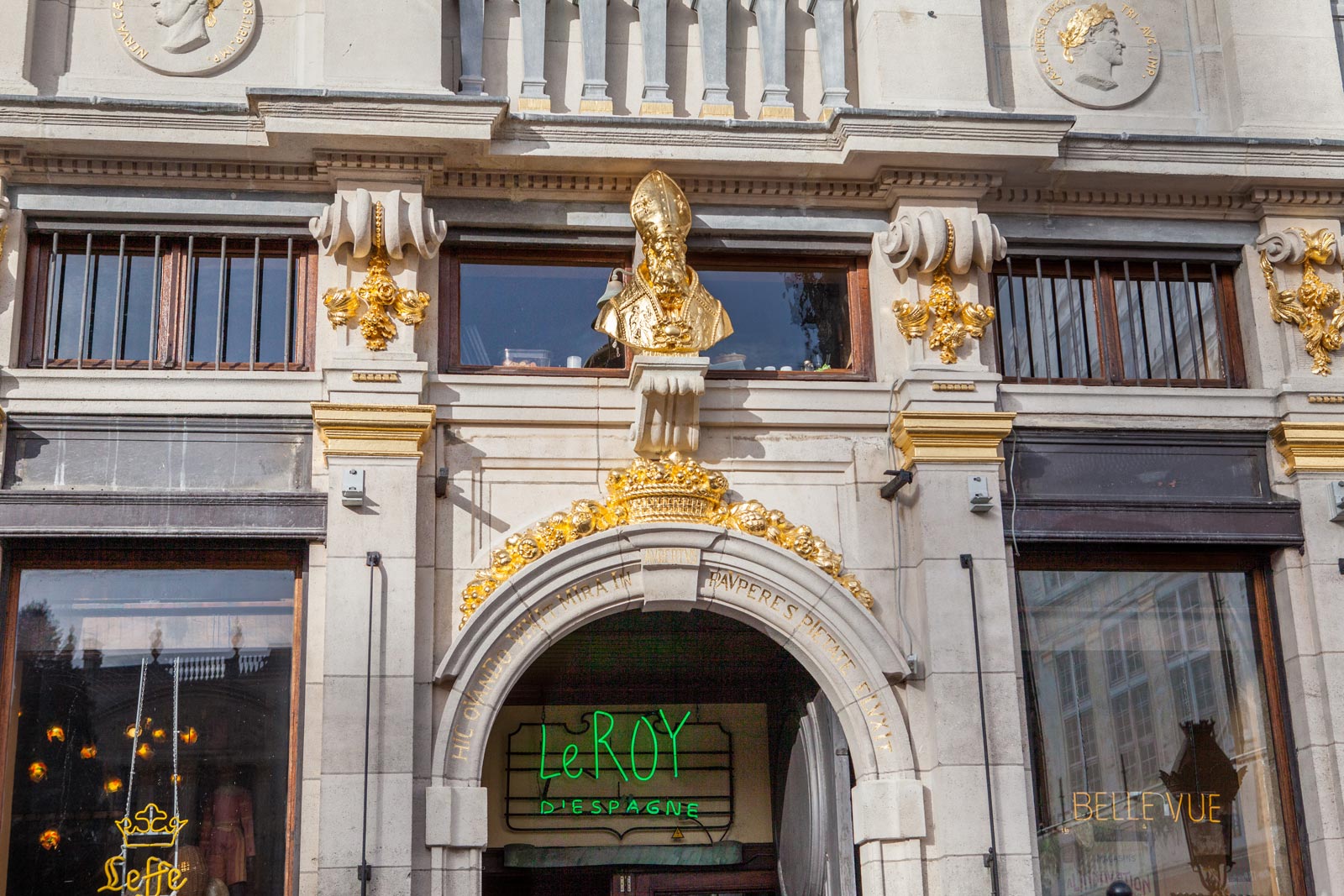
Above the entrance door, the gilded bronze bust of Saint Aubert⁶, Bishop of Cambrai and patron saint of bakers, watches over the house. He is the most explicit reminder of the building’s original purpose. On the second floor, a far more imposing sculpture represents the triumph of Charles II, then King of Spain and sovereign of the Southern Netherlands⁷. It is this royal bust, accompanied by the Flemish inscription “Den Coninck van Spaignien”, that would give the building its name.
Higher still, on the balustrade, six allegorical statues personify the elements essential to the making of bread: Strength (Hercules leaning on his club), Wheat (Ceres carrying a sheaf of grain and a sickle), Wind (a woman holding a windmill), Fire (Mercury, inventor of fire), Water (Neptune with his trident) and Providence (Minerva holding a cornucopia and an hourglass).
On the first floor, four medallions represent Roman emperors all linked to the Iberian Peninsula: Marcus Aurelius, Decius, Nerva and Trajan. A further nod to the house’s Spanish name.
From guild house to brasserie
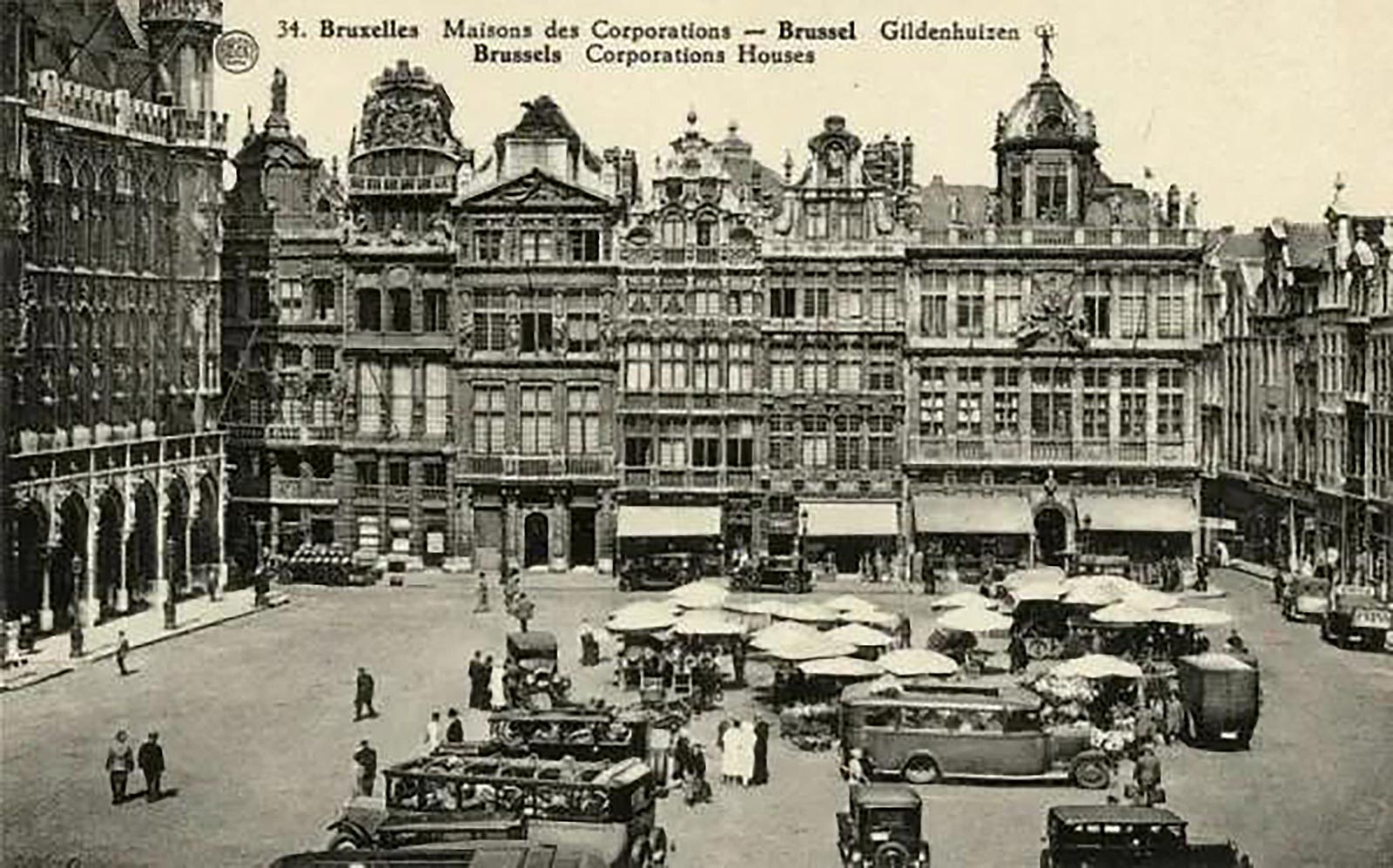
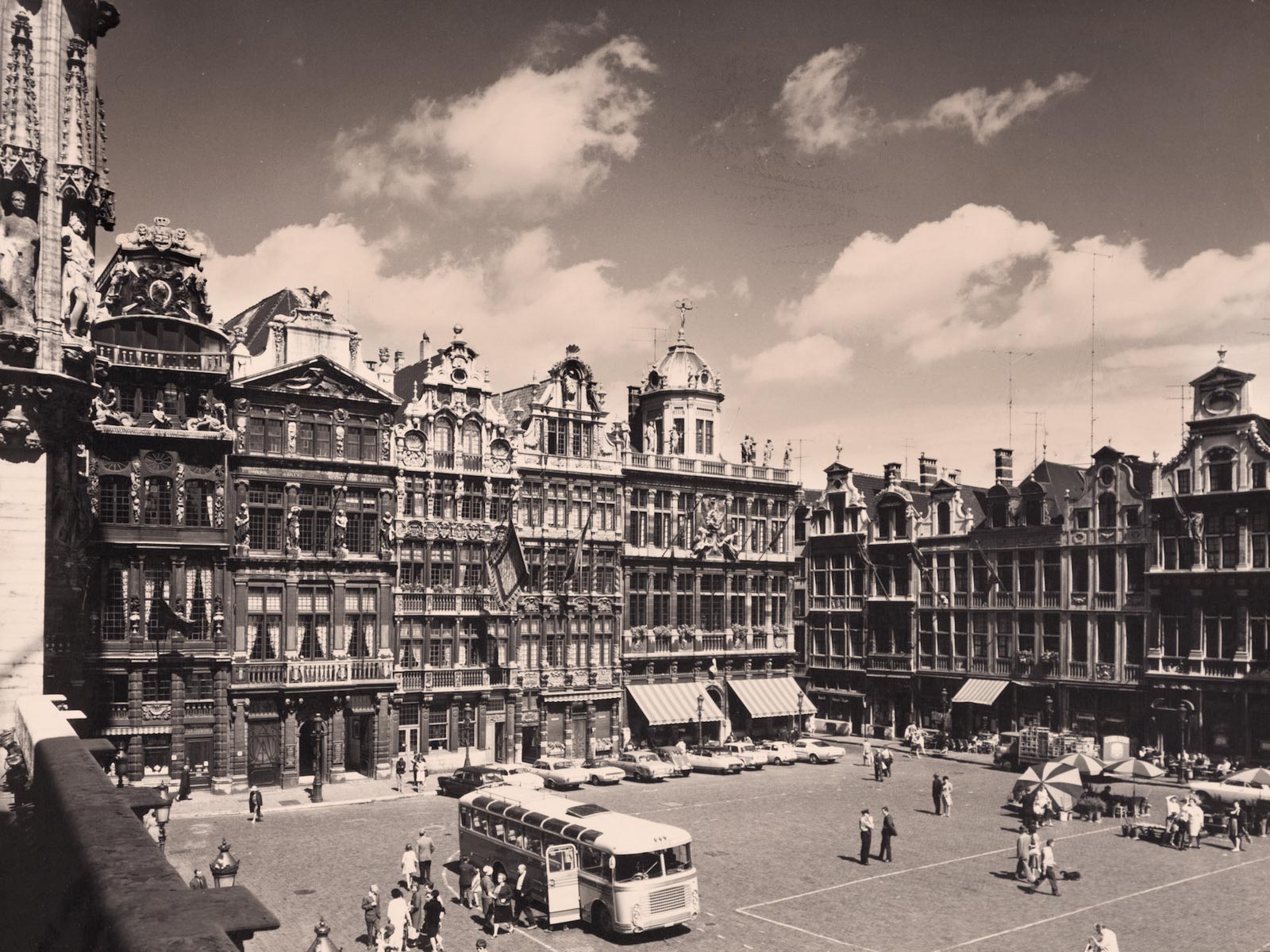
With the end of the Ancien Régime and the abolition of the guilds, the house lost its original purpose. The 19th century was not kind to it: the sculpted decoration deteriorated, the lantern tower disappeared, and an additional floor was even inserted inside the building.
It was not until 1901 that a major restoration was undertaken. Architect Adolphe Samyn⁸, who had already worked on several houses on the Grand-Place, rebuilt the structure in a neo-Baroque style faithful to the original spirit. He restored the sculpted decoration, the lantern tower and the original dome. The balustrade statues were recreated by three sculptors: Isidore De Rudder, Jacques De Haen and Victor Rousseau.
The ground floor, meanwhile, gradually took on the role of a café. After housing various businesses, including a hardware shop — whose first-floor gallery still survives — the establishment finally found its identity as a brasserie for good in 1952.
Le Roy d’Espagne today
Listed as a historic monument in 1977, then in its entirety in 2002, the Maison du Roy d’Espagne is today one of the most iconic brasseries in Brussels.
Under the management of Jean-Philippe Bosman, the establishment upholds the spirit of an authentically Brussels brasserie, where guests come as much for the beers and the food as for the setting: aged woodwork, a décor from another era, and that unobstructed view of the Grand-Place that has not changed in three centuries. A place that, like the city that shelters it, has known how to rise again and reinvent itself without ever forgetting where it came from.
Notes
- Serhuyghskintsteen : Literally “the stone of the Serhuyghs children”. Name given to the fortified house (steen) of the Serhuyghs lineage family, which occupied this site before the bombardment of 1695.
- War of the Grand Alliance (1688–1697) : European conflict opposing Louis XIV’s France against a broad coalition led by William III of Orange, including England, Spain and the Holy Roman Empire.
- Jean Cosyn : Brussels architect and sculptor active during the reconstruction of the Grand-Place after 1695. The archivist Guillaume Des Marez attributes the design of several façades on the square to him.
- Attic : In architecture, a small additional storey situated above the main cornice of a building, often decorated with a balustrade.
- Chronogram : An inscription in which certain letters, read as Roman numerals, reveal a date. The two chronograms on Le Roy d’Espagne both indicate the year 1697.
- Saint Aubert : Bishop of Cambrai in the 7th century, considered the patron saint of bakers. His gilded bronze bust, signed by sculptor Jules Lagae, adorns the entrance of the building.
- Southern Netherlands : Name given to the territories corresponding approximately to present-day Belgium, then under Spanish sovereignty. Charles II of Spain was their sovereign at the time of the construction of Le Roy d’Espagne.
- Adolphe Samyn : Brussels architect who rebuilt or restored several houses on the Grand-Place between 1897 and 1902.
Disclaimer: The historical images on this page bear witness to the rich history of the Grand-Place and Le Roy d’Espagne. We have endeavoured to use only copyright-free documents. If any of these images belong to you, please contact us at sales@roydespagne.be; we will be happy to credit you or remove the image.
Sources
- Le Patrimoine monumental de la Belgique, Bruxelles, Volume 1B, Pentagone E-M, Pierre Mardaga éditeur, 1993
- Pol Meirsschaut, Les sculptures de plein air à Bruxelles : Guide explicatif, éditions Émile Bruylant, 1900
- Alexandre Henne et Alphonse Wauters, Histoire de la ville de Bruxelles, Tome troisième, 1845
- Éric Hennaut, Maurice Culot et al., Le Bombardement de Bruxelles par Louis XIV et la reconstruction qui s’ensuivit : 1695-1700, Archives d’Architecture Moderne, 1992
- Protected heritage register, Brussels-Capital Region: patrimoine.brussels
- Encyclopaedia of European Cultural Heritage: ehne.fr
- Collections of the Museum of the City of Brussels: collections.heritage.brussels