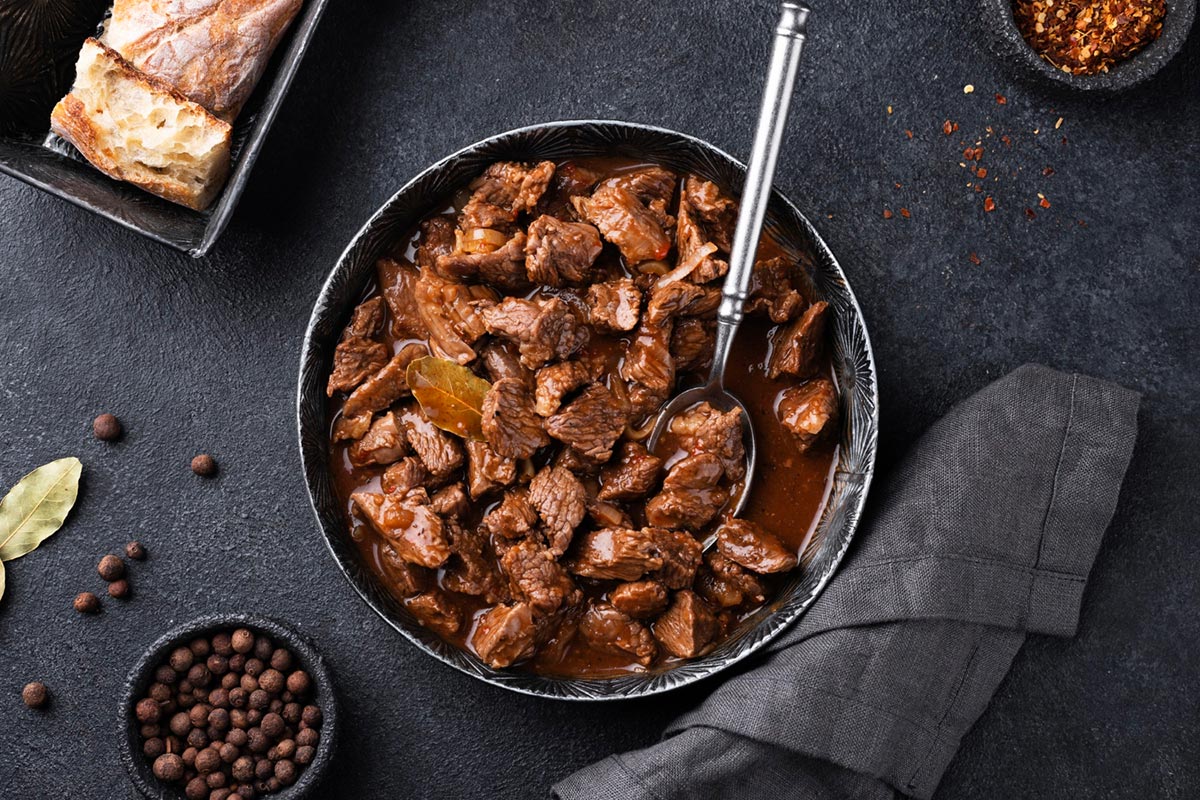
Something rather lovely happens when a pot of carbonade flamande, Belgium’s traditional beef stew braised in beer, has been simmering in a kitchen for two hours. The aroma of dark beer mingles with soft onions and gingerbread slowly dissolving into the sauce. This dish captures the soul of Belgian cooking, with its patience, generosity and unmistakable touch of sweet and savoury comfort.
At Le Roy d’Espagne, on Brussels’ Grand-Place, we have been making it for years, with our own variation that you will not find on any other menu. This article follows two paths. One is the classic recipe, passed down through generations, and the other is our own version, a little different but every bit as Belgian. You will learn which cut of beef to choose, which beer works best and why some kitchens depart from tradition without ever betraying it.
Where does carbonade flamande come from?
The French word carbonade comes from the Latin carbo, meaning charcoal. Originally, the meat cooked slowly over glowing embers by the fire, which explains the name that has survived to this day. Legend places the dish in the Middle Ages, although the most reliable written records date from the late 19th century. It probably developed from medieval stews made with meat, onions and beer, but there is no evidence of a direct, unbroken tradition. That caution does not make the dish any less legitimate. It simply reminds us that a good story deserves to be told accurately.
Another story credits miners in northern France with helping to popularise the dish. They supposedly reheated leftover meat over coal embers before pouring beer over it. These working-class roots fit the spirit of the recipe, which was made to provide a hearty meal after a long day’s work. Flemish beef stew is still associated with generous, unfussy cooking, found in Belgian homes as well as estaminets, the traditional pubs of northern France and Belgium. The French spelling varies between carbonade and carbonnade, but the principle remains the same. Beef is slowly braised in beer until meltingly tender.
Which cut of beef should you choose for an authentic Belgian stew?
The choice of meat determines the success of the dish long before the beer or spices come into play. Flemish beef stew needs long, gentle cooking, so quick-cooking premium cuts such as fillet or rump are best avoided. Choose cuts rich in collagen instead. They become tender after several hours of simmering without drying out. These are the cuts that work best.
- Chuck or blade steak: tender and well marbled, it becomes silky after long cooking and is the most common choice.
- Beef cheek: very fibrous at first, it becomes exceptionally tender after three hours and produces a particularly rich sauce.
- Beef neck: less familiar but just as effective, it brings plenty of flavour and a tender texture at a modest price.
- Beef shin: a lean, fibrous cut for anyone who prefers a slightly firmer texture.
Some butchers sell ready-made mixes for beef stew, often combining several of these cuts. This is a convenient option if you are short on time, provided the meat contains enough fat to withstand the long cooking. Meat that is too lean will produce a dry stew, even with the finest beer.
The classic Flemish beef stew recipe
Before moving on to our version, here is the traditional recipe prepared in Belgium and northern France, with dark beer, gingerbread and a touch of mustard to balance the sweet and savoury flavours.
Traditional ingredients
For four people, allow about one and a half kilos of beef cut into large cubes. You will also need the following ingredients.
- Braising beef (chuck, cheek or neck): about 1.5kg, cut into 4cm cubes.
- Dark Belgian beer, preferably an abbey-style or Trappist beer: 50 to 75cl.
- Yellow onions: three to four, finely sliced.
- Butter: two tablespoons, for browning the onions and meat.
- Vinegar: a splash, for deglazing the casserole.
- Gingerbread: two to three slices, spread with mustard.
- Mustard: one to two tablespoons, for spreading on the gingerbread.
- Brown sugar: two tablespoons, to balance the bitterness of the beer.
- Beef stock: about 25cl.
- Finishing touches: thyme, bay leaves, salt and pepper to taste.
The beer deserves a word of its own because it carries the entire dish. A dark beer is the safest option, bringing caramel notes and a gentle sweetness that naturally balances the sauce. An amber beer also works very well, with a little more character and slightly more bitterness. Avoid heavily hopped beers such as IPA. Their bitterness does not respond well to several hours of cooking and can unbalance the sauce rather than enrich it.
Once everything is ready, it is time to start cooking.

Preparation and slow cooking, step by step
First, brown the onions in butter, then set them aside in a dish. In the same heavy casserole, brown the beef over high heat on all sides. This sears the meat and develops the flavourful cooking juices at the bottom. Return the onions, then add the brown sugar and a little vinegar to deglaze the casserole. Pour the beer down the sides and leave it uncovered for a few minutes so some of the alcohol can evaporate. Add enough stock to cover the meat, followed by the thyme and bay leaves.
Spread the gingerbread slices with mustard and place them on top of the meat, mustard side down. Cover the casserole and simmer gently for about three hours without stirring, allowing the gingerbread to dissolve slowly into the sauce. Remove the lid for the final half-hour. The sauce will reduce and become glossy and syrupy. The meat is ready when a fork slides into it without resistance. Taste, adjust the seasoning and serve.
Something not quite right during cooking?
A few simple adjustments can rescue the most common mishaps.
- Sauce too thin: remove the lid for the final 20 minutes and reduce uncovered, or thicken it with a spoonful of cornstarch mixed with a little cold water.
- Sauce too bitter: add a spoonful of brown sugar or honey to restore the balance. A heavily hopped beer can sometimes dominate the dish.
- Meat still firm: continue cooking gently. Flemish beef stew is far more forgiving of extra time than excessive heat.
What makes Le Roy d’Espagne’s Flemish beef stew different
We start with this traditional base and add two touches that give our stew a softer, rounder flavour. These choices have been part of our recipe for a long time. We keep the exact proportions to ourselves, but share the spirit of the recipe rather than a method you can reproduce exactly at home.
Carrots and honey: the touch that changes everything
On our menu, the stew combines beef slowly cooked with beer, carrots, onions, gingerbread and honey. The carrots bring natural sweetness and extra texture, while honey replaces the brown sugar and lends the dish a softer, slightly more floral roundness. The result is a sauce that is less tangy than the classic version without losing the sweet and savoury balance that defines the dish. It stays true to the spirit of Flemish beef stew without copying every detail.
A blend of three beers instead of one
Most recipes rely on a single dark or amber beer. We use three in our stew, Piedbœuf, Leffe and Stella. Each plays a part in the final balance.
Piedbœuf, a historic Belgian table beer with little sweetness, adds depth and a lingering finish without weighing down the sauce. Leffe brings malted roundness and caramel notes. Stella adds a lighter touch that keeps the sauce from becoming too dense.
Blending them takes experience, as none of the three should overpower the others. It is also what makes our stew difficult to reproduce exactly at home, even when you know the ingredients.
What should you serve with Flemish beef stew?
Flemish beef stew is traditionally served with fries, cooked twice for a fluffy centre and a crisp exterior. Several other accompaniments work just as well, depending on your taste and what you have to hand.
- Fries: the most popular choice in Belgium and northern France.
- Stoemp: a Brussels-style mash of potatoes and vegetables such as carrots or leeks.
- Classic mashed potatoes: simple and perfect for soaking up the sauce.
- Wide pasta such as pappardelle: an Italian-inspired alternative that works well with the rich sauce.
Some people prefer potato croquettes or baby potatoes with their stew. Whatever you choose, keep the accompaniment fairly neutral so the sauce can shine rather than compete with it.

Oven or stovetop: which method should you choose?
A heavy casserole over low heat remains the most traditional method. It lets you monitor the sauce and adjust the cooking when necessary. The oven has one genuine advantage, as its steady heat reduces the risk of the stew catching on the bottom. Allow about three hours at 150°C (302°F), covered, then check the consistency of the sauce towards the end.
The choice mainly depends on how you organise your time. The stovetop needs occasional attention, while the oven gives you more freedom during cooking. Either way, patience is the one non-negotiable ingredient.
Flemish beef stew or beef bourguignon: what is the difference?
Both dishes follow the same basic idea, slowly cooking beef with onions until tender. The main difference is the cooking liquid, with dark beer used for Flemish beef stew and red wine for beef bourguignon. That changes the entire character of the dish. One is sweeter and maltier, while the other is more tannic and tangy.
Flemish beef stew usually includes gingerbread or bread spread with mustard, adding a sweet, spiced note that is absent from beef bourguignon. It is sometimes affectionately called the beef bourguignon of the North, a nickname that highlights the kinship between the two dishes without confusing them. You will find it on the menus of many estaminets, the northern French and Belgian counterpart of the bistro.
Try authentic carbonade flamande at Le Roy d’Espagne
The classic recipe is perfectly achievable at home if you have a little time. To discover our version with carrots, honey and three beers, you will need to step inside our brasserie on Brussels’ Grand-Place.
We serve it all year round in a historic setting that adds even more character to the experience. Browse our menu to discover our other dishes, or book your table now.
FAQ
These are the questions we are most often asked about the recipe.
- How long does Flemish beef stew take to cook?
- Allow about three hours of gentle cooking once the beef and beer are together in the casserole. This slow cooking is essential for tender meat and a properly reduced sauce.
- Can Flemish beef stew be made in advance?
- Yes, and we recommend it. The flavour becomes deeper the next day, once everything has had time to mingle as the stew rests.
- Can Flemish beef stew be frozen?
- Yes, it freezes very well in an airtight container for up to three months. Defrost it in the refrigerator before reheating gently.
- Does Flemish beef stew still contain alcohol after cooking?
- Some of the alcohol evaporates during the long cooking, but not all of it. If you are cooking for children or anyone avoiding alcohol, an alcohol-free beer is a better choice.