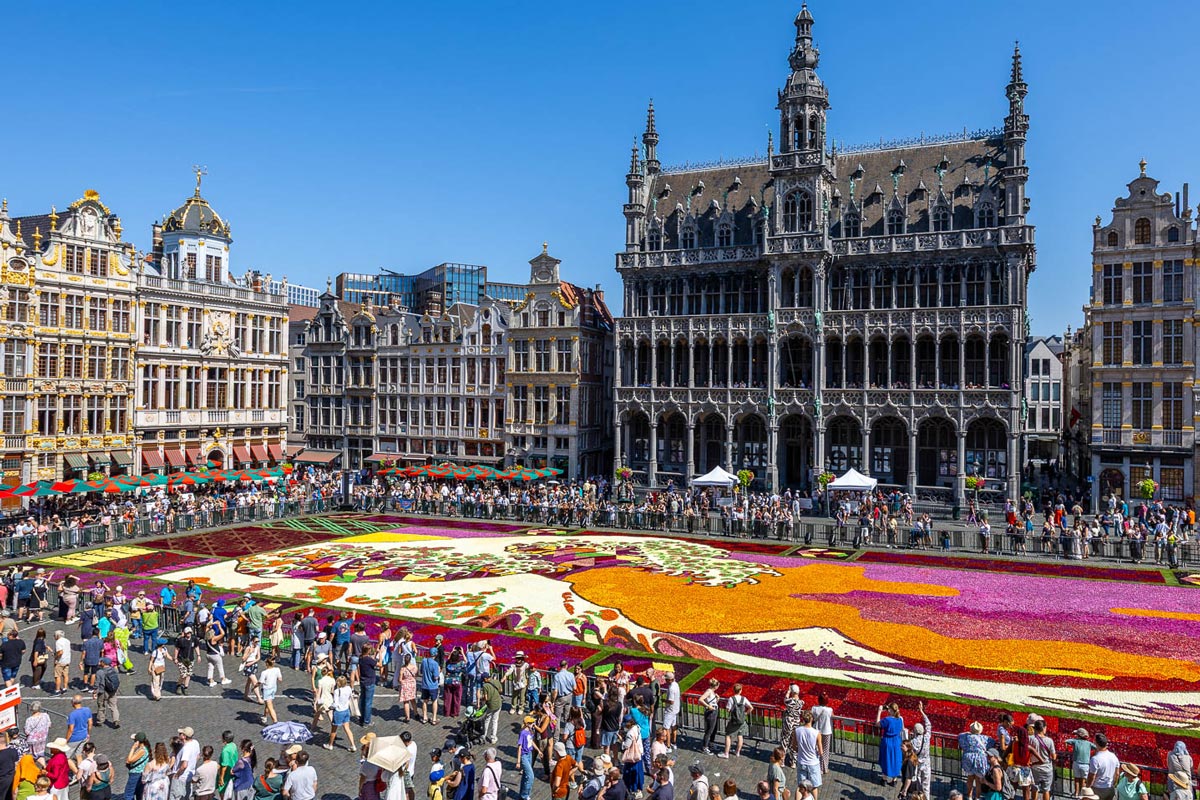
Every two years, Brussels’ Grand-Place is completely transformed. Its cobblestones disappear beneath hundreds of thousands of flowers, all laid by hand by volunteers from across the country. The result looks more like a giant fresco than a simple decoration, and it lasts only a few days before vanishing. This event is known as the Brussels Flower Carpet, and each edition draws tens of thousands of visitors from all over Europe. Behind the spectacular display lies a little-known story of Belgian growers who found a way to turn their expertise into ephemeral art. We explain how it all began, how a Flower Carpet is made and what the 2026 edition has in store.
The Flower Carpet, a tradition born in the begonia fields
The story of the Brussels Flower Carpet begins far from the Grand-Place. Born in Zottegem in 1927, landscape architect Etienne Stautemas began creating flower carpets in the early 1950s. Smaller and simpler than today’s displays, these early pieces were made mainly from begonias, prized for their resistance to the weather and their rich range of colours.
At the time, Belgium was one of the world’s leading begonia growers and exporters. An entire horticultural industry depended on the flower, particularly around Ghent. Several Flemish towns began hosting modest flower carpets designed to showcase this expertise.
In 1970, two Brussels aldermen saw a flower carpet in Oudenaarde and imagined a similar display in the heart of the capital. This marked the beginning of a collaboration between the City and Flemish growers, and the first Flower Carpet was laid on the Grand-Place in 1971. Since 1986, the event has returned every two years, always around the weekend of 15 August.
Begonias dominated the first 22 editions. As their production has become scarcer in Belgium, the designers have also turned to dahlias, another classic of Belgian horticulture. This change preserves a broad palette of colours while continuing to favour locally grown flowers.
How a Flower Carpet comes to life: from design to cobblestones
Creating a Flower Carpet in Brussels takes careful preparation. Work on the theme can begin two years before the event. The non-profit association Tapis de Fleurs Bruxelles brings together illustrators, graphic designers and landscape architects around a new subject for each edition.
Choosing the theme and designer
Each edition highlights a different subject, such as a guest country, a historical event or a prestigious coat of arms. Once the theme has been chosen, a designer creates a pattern while taking the limits of plant material into account. These include the available colours, the texture of each flower and the way they change over several days. The required number of flowers is then calculated and the colour combinations that will bring the design to life are defined.
A few days before the opening, the full-scale pattern is transferred onto an enormous organic cotton canvas spread directly over the cobblestones of the Grand-Place. Every area of colour is marked out before the first flower is laid.
The day the carpet is laid
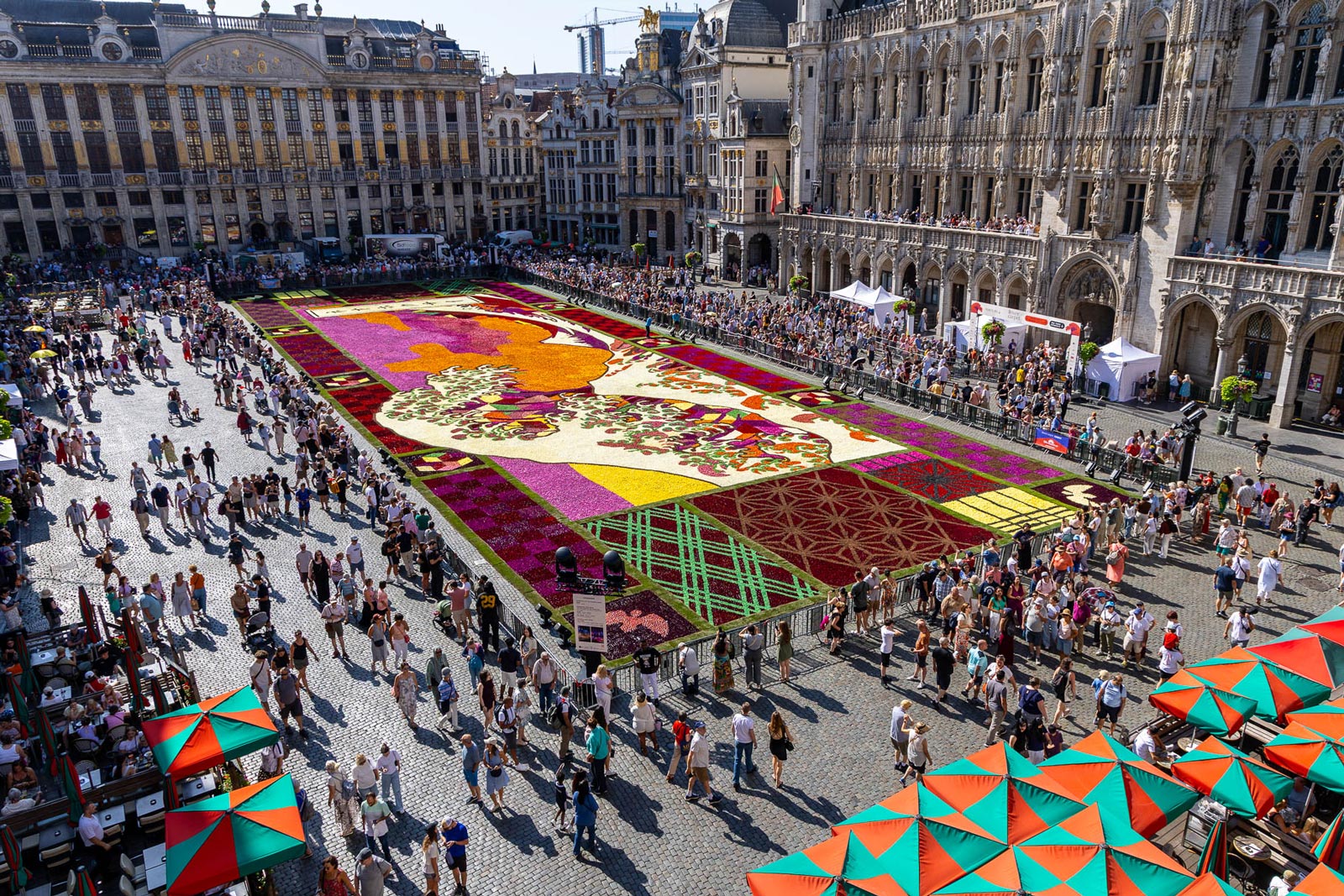
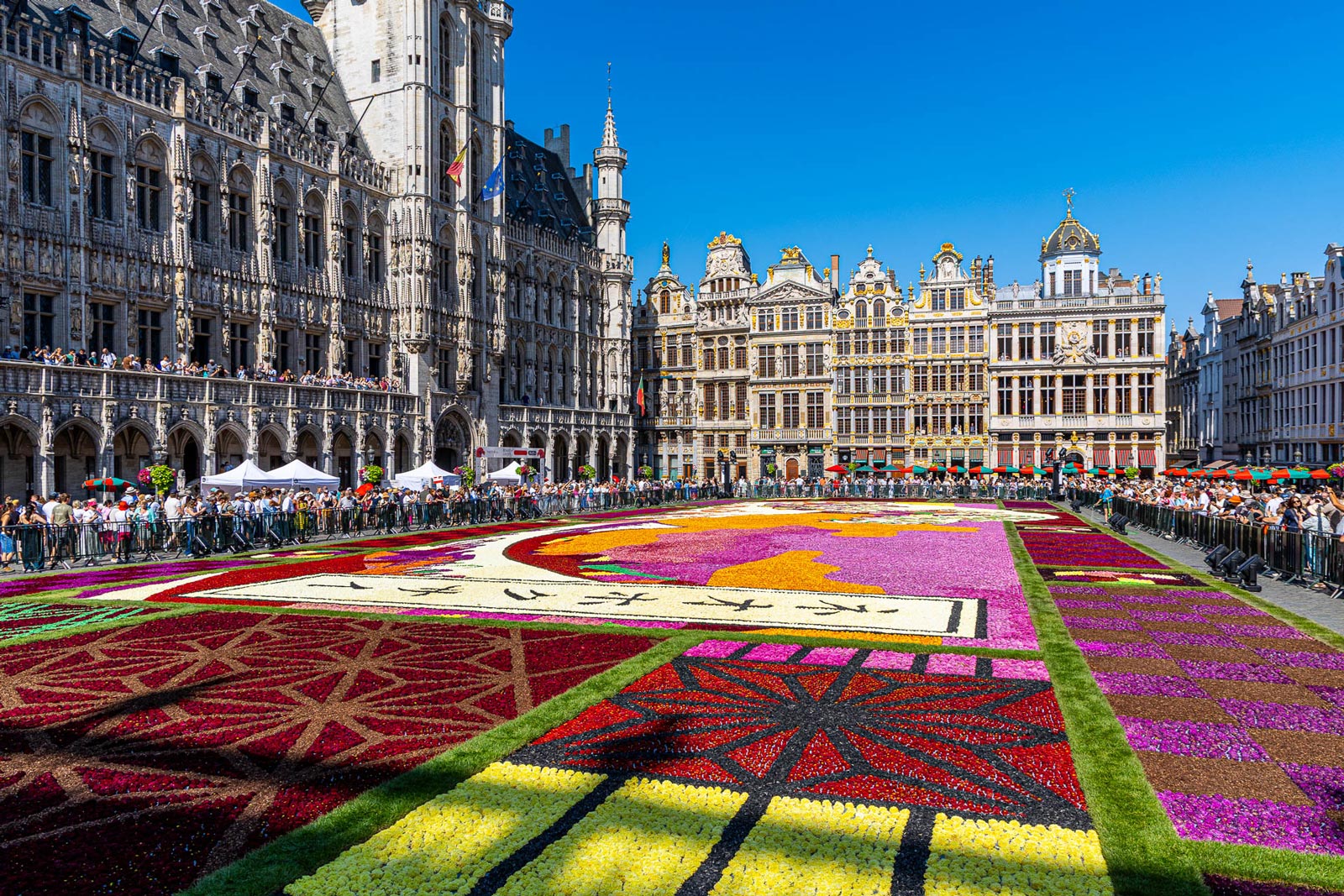
On the big day, the atmosphere changes completely. A team of volunteers, often around a hundred people, gathers at dawn for what regulars call the weaving of the carpet. Kneeling on the canvas, they place the flowers one by one at a density of roughly 300 flowers per square metre.
The spaces between the floral patterns are filled with rolls of turf, which help keep the whole display fresh under the August sun. In just a few hours, the Grand-Place is covered by a living carpet ready to be unveiled to the public. For many volunteers, this collective effort is one of their fondest memories of the event, aching knees included.
A Grand-Place tradition every two years
The Brussels Flower Carpet returns every other year, always around the weekend of 15 August. This regular schedule has made it a much-anticipated event for Brussels residents and visitors who plan their stay around the dates. Access to the Grand-Place remains free throughout the event, and this UNESCO World Heritage site can be visited by day or night.
Where is the best place to see the Flower Carpet?
There are several ways to enjoy the carpet, depending on the experience you want and your budget.
- From the Grand-Place: the ground-level view reveals the detail of the flowers and the volunteers’ painstaking work, but offers only a partial view of the complete design.
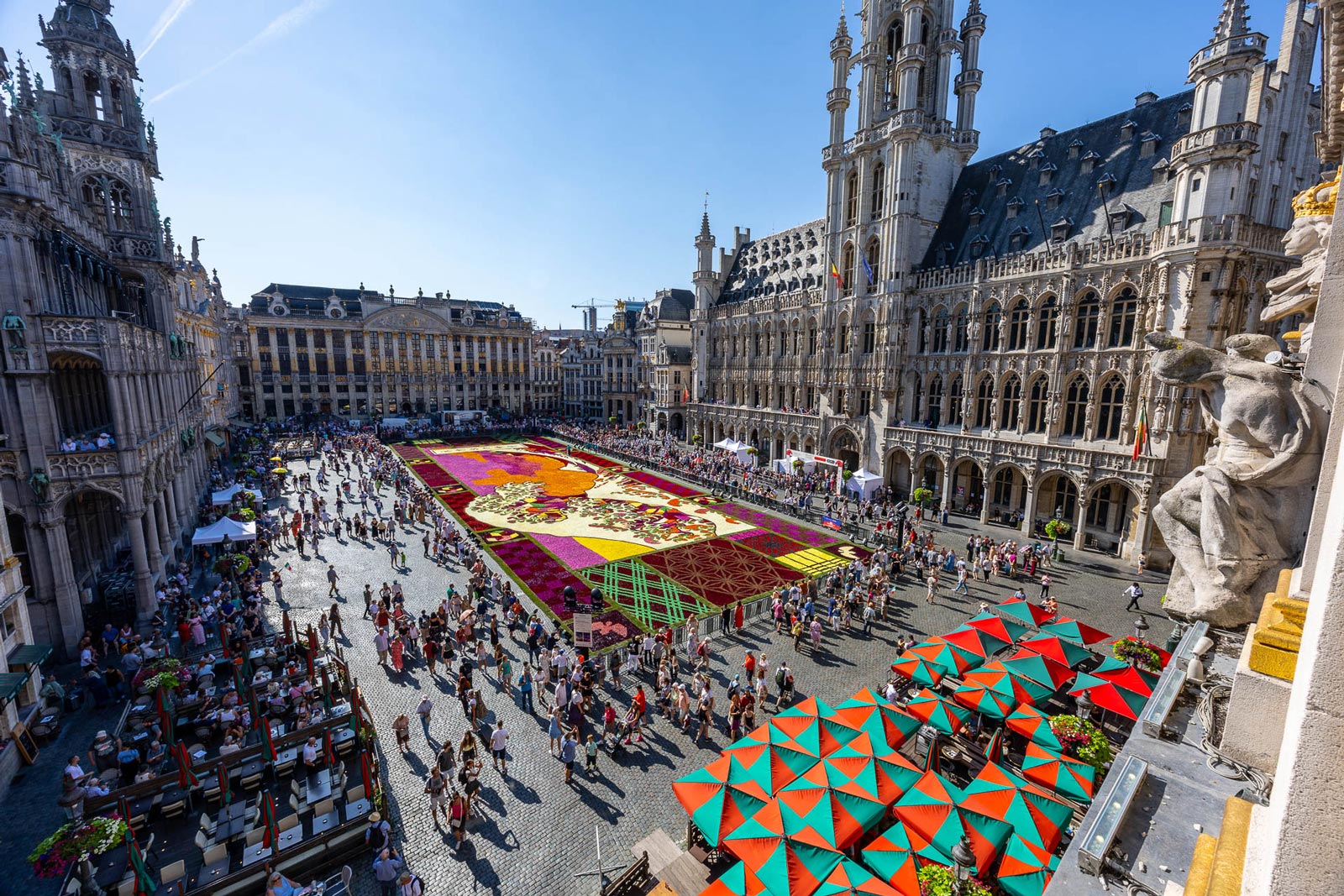
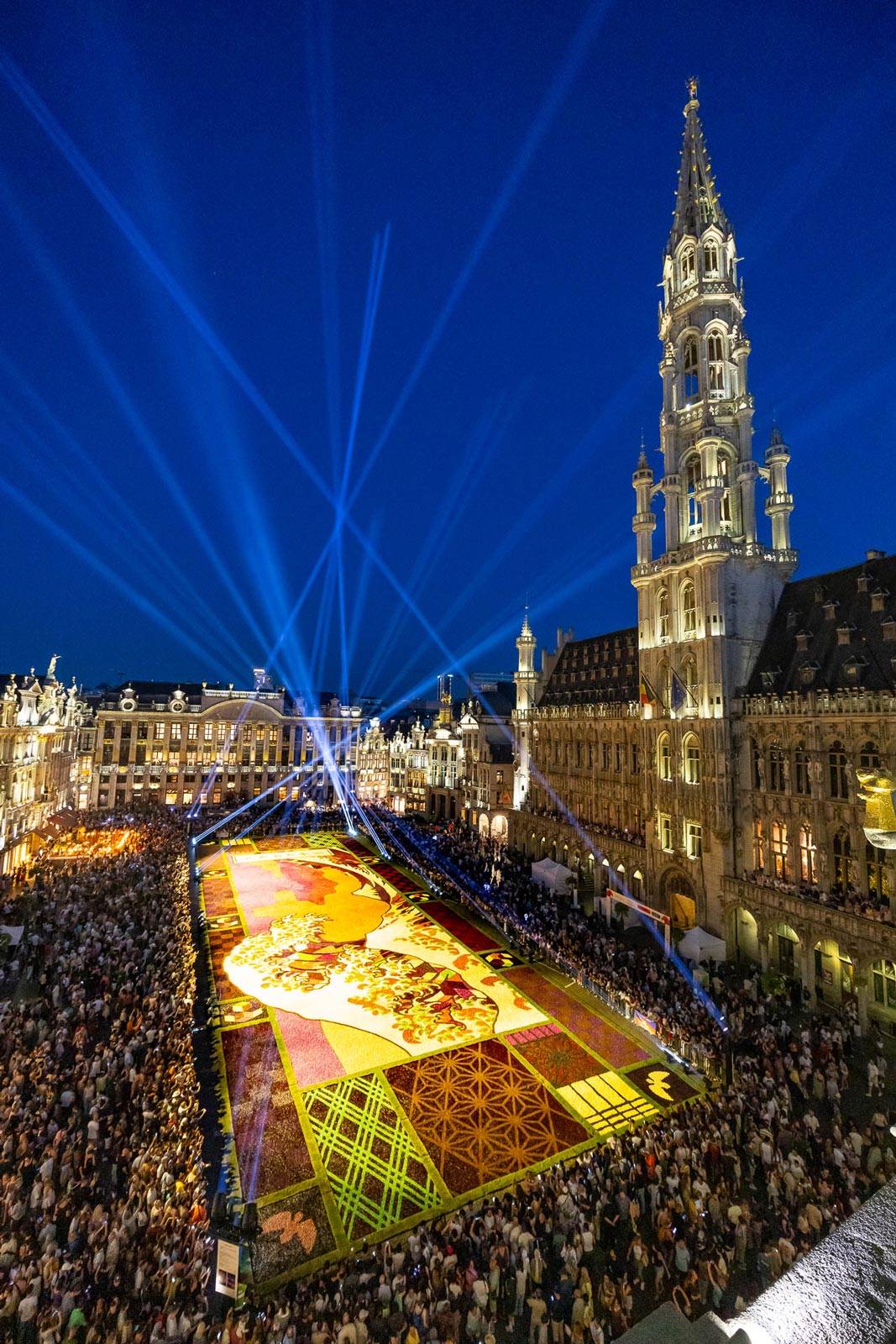
- From the balcony of Brussels City Hall: this is one of the few viewpoints where the whole design can be seen at a glance. Admission requires a paid ticket, available in advance or on site. The wait can exceed an hour in full sun, and the balcony is often crowded.
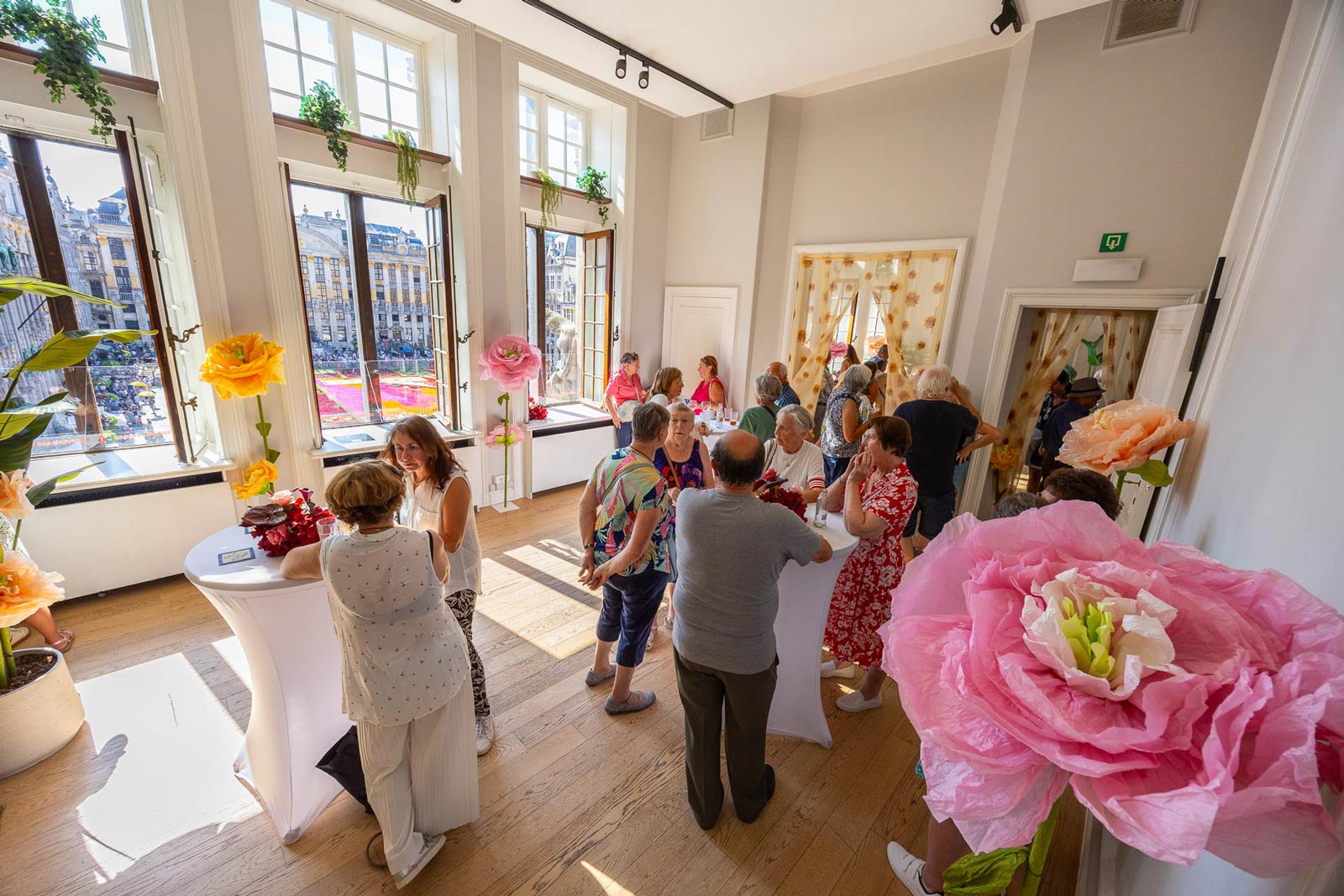
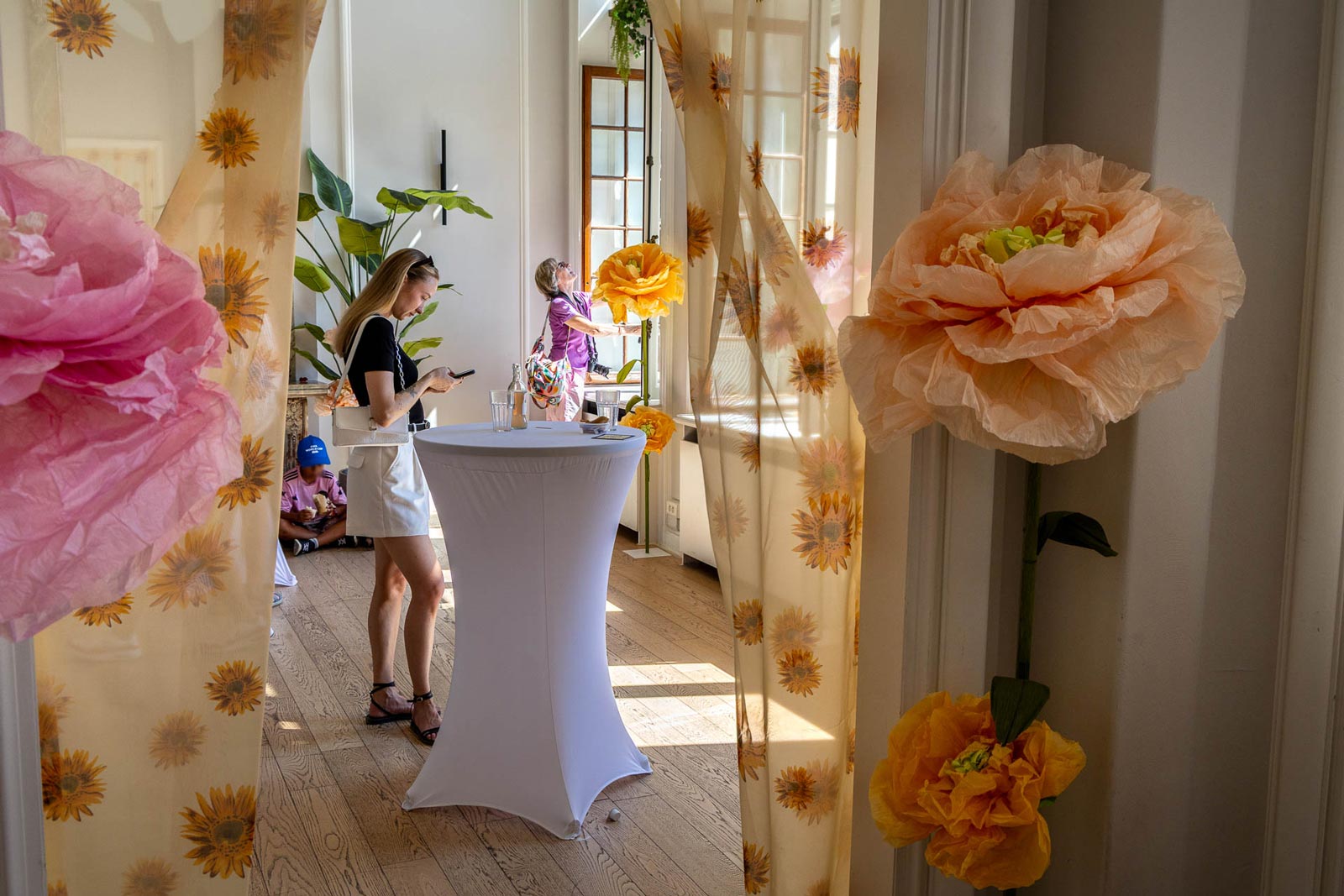
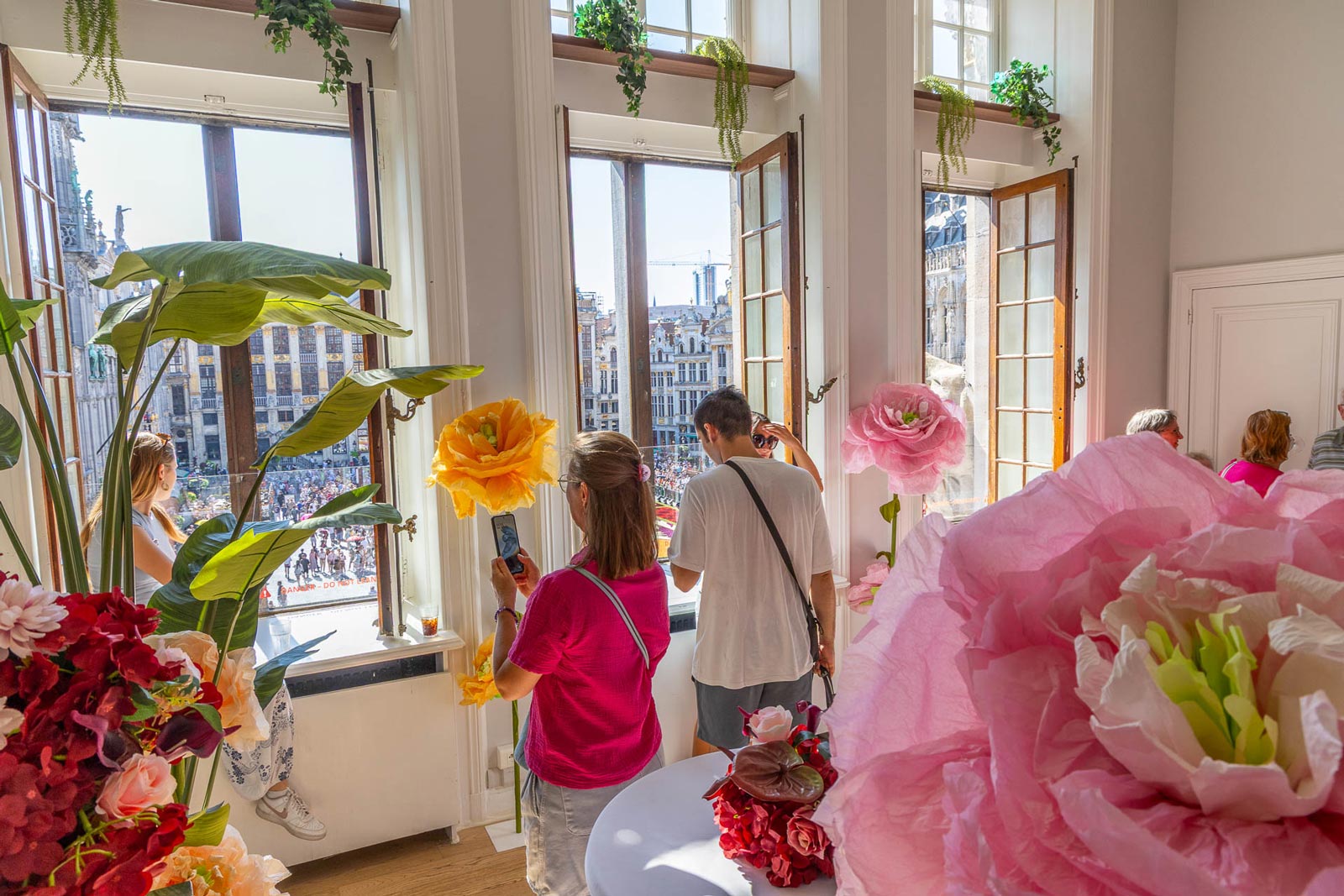
- From the Prestige Room at Le Roy d’Espagne: located on the third floor, the room offers an unobstructed view of the carpet for €5, or €10 with a drink included, without the queue for the City Hall balcony. It is a good balance of comfort and price, with a more relaxed atmosphere.
For visitors looking for a different experience, the Prestige Room at Le Roy d’Espagne is a practical way to enjoy an elevated view away from the crowds at ground level and on the City Hall balcony.
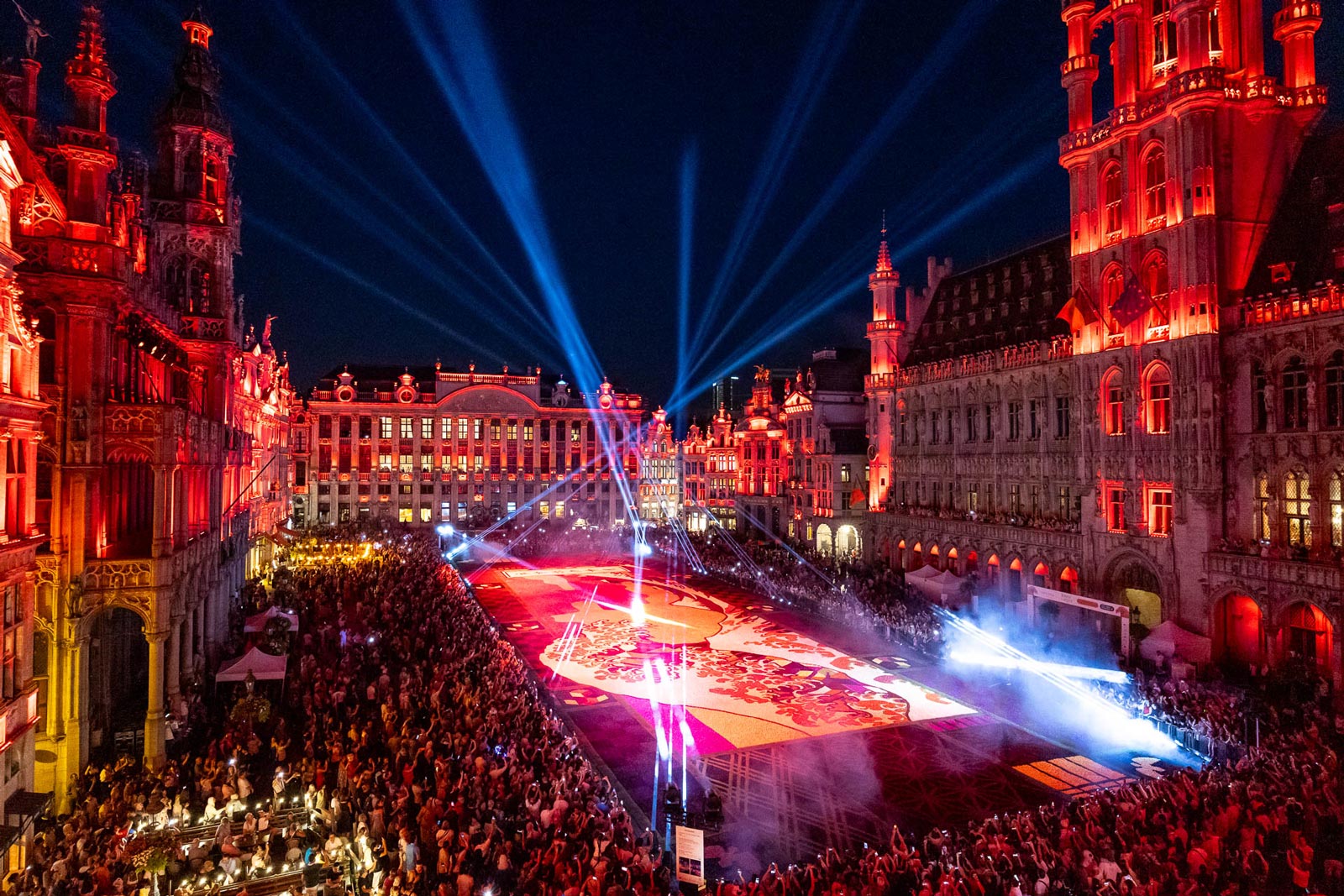
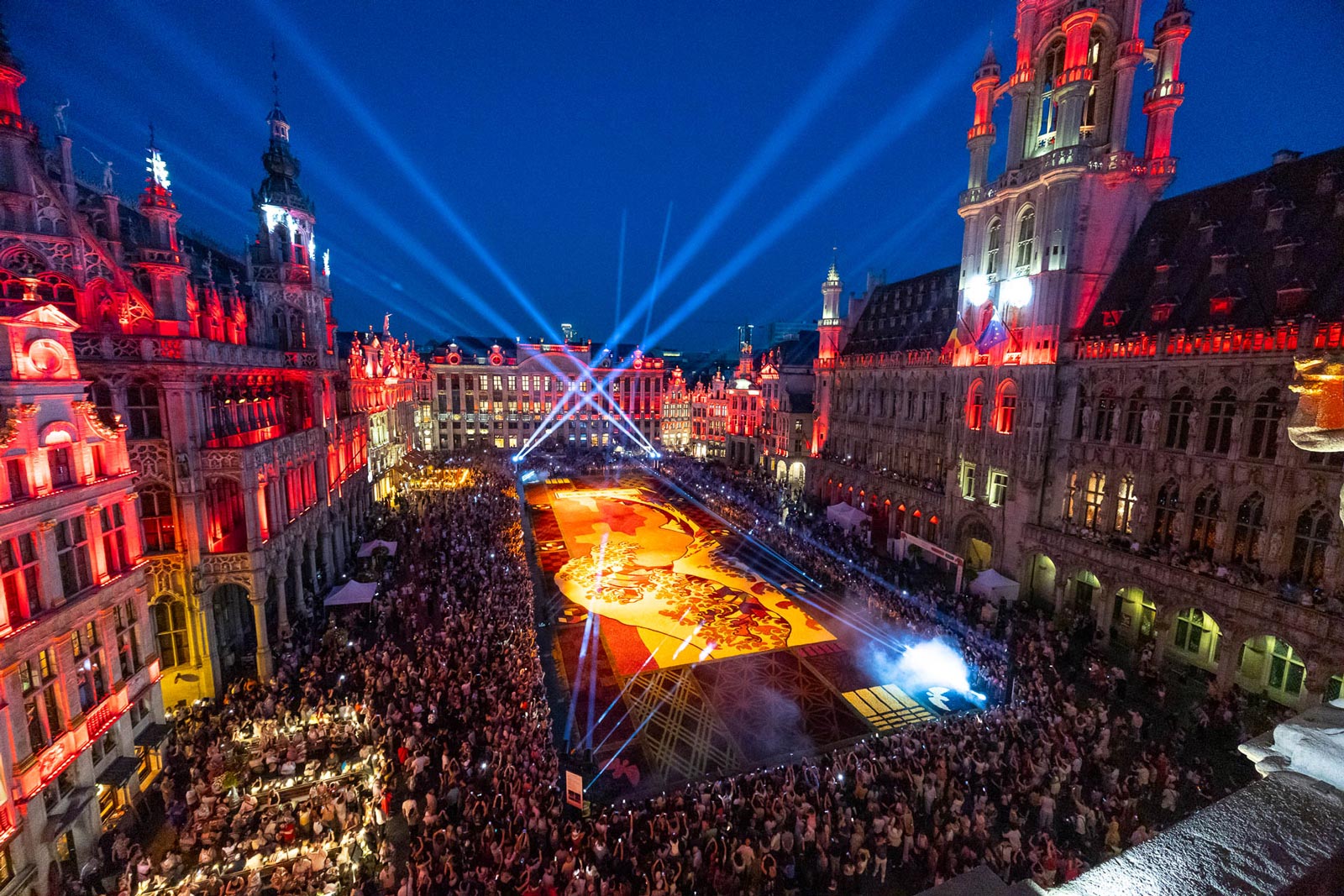
Early morning is usually the best time to see the carpet in a quieter atmosphere. The evening feels completely different, when a sound and light show highlights the flowers every half hour.
2026 edition: Japan in the spotlight
The 24th edition of the Brussels Flower Carpet takes place from Thursday 13 to Sunday 16 August 2026. It celebrates 160 years of diplomatic relations between Belgium and Japan with a reinterpretation of The Great Wave off Kanagawa, the iconic woodblock print by Japanese artist Hokusai. Artist Hiro Sugiyama, a professor at Kyoto University of the Arts, and his collective Enlightenment created the floral design. More than 700,000 flowers, mainly dahlias grown in Belgium, form a pattern measuring 70m by 24m, or 1,680m².
The major new feature of this edition is a second carpet, a first in the event’s history. Displayed at the Brussels Stock Exchange, it is inspired by hops, the plant used in brewing beer, as a nod to Belgium’s brewing heritage. Together, the two displays create a floral route between the Grand-Place and the Stock Exchange, extending the experience beyond the historic heart of the city.
Here is the practical information for this edition.
- Dates: Thursday 13 to Sunday 16 August 2026, day and night.
- Sound and light show: every evening from 9pm to 11pm, every 30 minutes, on the Grand-Place.
- City Hall balcony: €8 in advance, €9 on site, free for children under 10.
- Second carpet: at the Brussels Stock Exchange, inspired by hops, a historic first.
- Access to the Grand-Place: free throughout the event.
Experience the Flower Carpet from Le Roy d’Espagne
Few places in Brussels offer such a direct view of the Grand-Place as Le Roy d’Espagne. Housed in one of the square’s most recognisable buildings, the establishment lets you admire the Flower Carpet without jostling for space in the crowd, a welcome advantage during such a busy weekend.
The experience changes completely depending on the time of day. Breakfast overlooking the carpet offers a peaceful view before the crowds arrive, while dinner in the evening lets you enjoy the sound and light show from a privileged position. In between, several dining options suit the special atmosphere of these few days, when the Grand-Place becomes an ephemeral garden.
For groups or private events held during this period, the view of the Flower Carpet brings an extra dimension to the occasion and helps create a lasting memory.
Frequently asked questions
- Does the Flower Carpet take place every year?
- No. The event takes place every two years, in even-numbered years, usually around the weekend of 15 August. This gap gives the organisers time to choose a new theme, develop the design and select the flowers that will make up the carpet. Before planning your visit, check the year and dates of the relevant edition.
- Can you walk on the Flower Carpet?
- No. The carpet remains protected throughout the event to preserve the flowers and the overall design. Visitors walk around the display and can study the details from the edges of the Grand-Place. To appreciate the complete pattern, however, it is best to find a higher viewpoint.
- What happens to the flowers after the event?
- Once the event ends, the teams dismantle the carpet quickly so that the Grand-Place can return to normal. Because the flowers have been cut, they cannot be replanted. How they are handled afterwards, along with the turf, bark and other natural materials, depends on the arrangements made for each edition.
- Do you need to book the City Hall balcony?
- Booking is not always compulsory, as some tickets may be sold on site. Advance booking is still strongly recommended, especially over the weekend of 15 August, because the most popular time slots can sell out quickly. Allow some waiting time too, as the balcony can accommodate only a limited number of visitors at once.
- Can you see the Flower Carpet at night?
- Yes. The carpet remains in place day and night for the duration of the event. After sunset, the lighting of the Grand-Place gives it a completely different appearance, while a sound and light show takes place at regular intervals. Exact times can vary between editions, so check the programme before your visit.