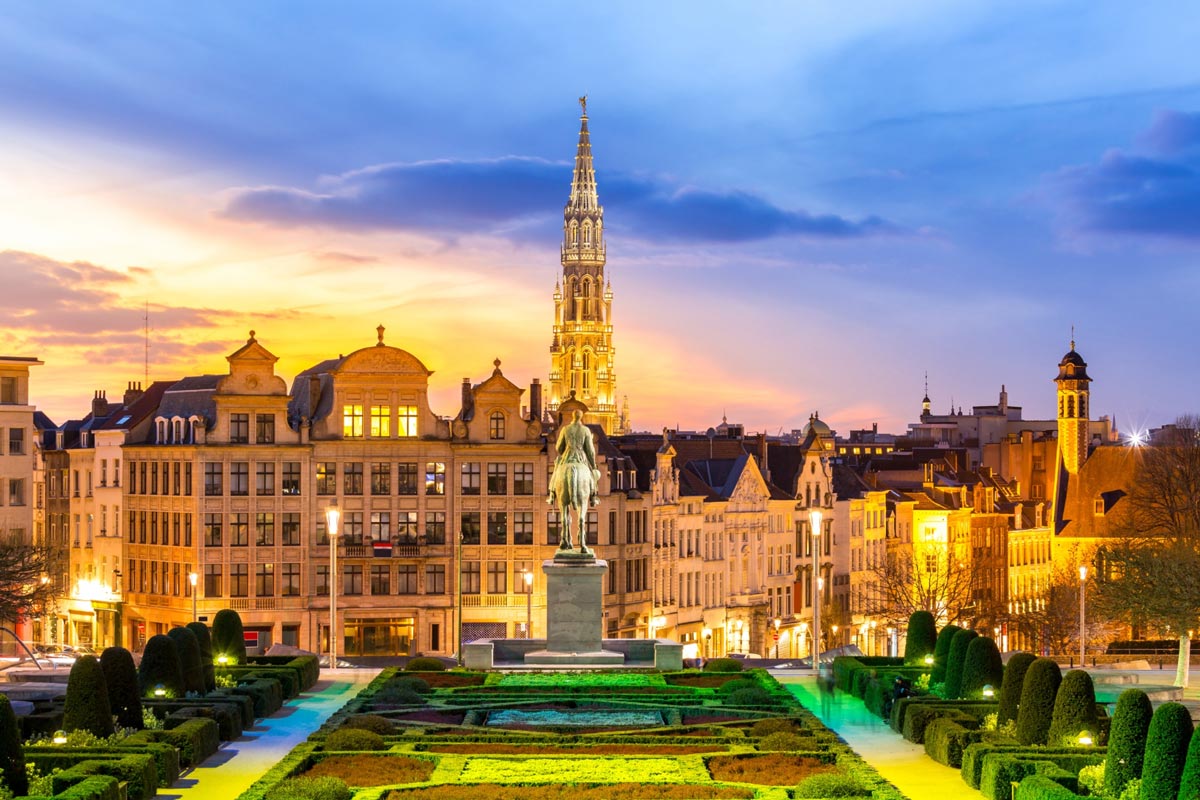
From our restaurant on the Grand-Place, we’ve watched travelers from all over the world pass by for decades. Day after day, the same small mistakes repeat themselves, not out of carelessness, simply because no one took the time to explain them. It isn’t a lack of curiosity on the visitors’ part, more a lack of landmarks to go by. So here it is, with all the goodwill of someone who has watched this square for years, what we notice most often.
Some of these habits are about how to explore the city, others about the table, and one last one touches on a debate that has long pitted Belgium against a (practically) neighboring country famous for its chocolate (though which country could that possibly be? 🤔). None of this is dramatic, just a few simple adjustments that change the way you experience Brussels. Here’s the guide.
1. Sticking to the Grand-Place, Manneken Pis and Royal Saint-Hubert Galleries triangle
Most visitors arrive with the same list in mind: the Grand-Place, the Manneken Pis, then the Royal Saint-Hubert Galleries for shopping and chocolate. This trio takes an hour and a half, two hours at most, to see. The problem isn’t seeing it, it’s stopping there and leaving thinking you’ve understood Brussels.
A ten-minute walk from the Grand-Place, the Sainte-Catherine district reveals another side of the city, with its old docks, fishmongers and quieter terraces. A little further on, the Sablon draws antique lovers and elegant shop windows, while the Marolles keep the working-class soul of a rawer Brussels, flea market included.
None of these neighborhoods need a full day each. An hour of walking is often enough to feel the shift in atmosphere, and it’s precisely that shift that gives a trip its depth. Brussels isn’t a city of standalone monuments, it’s a mosaic of neighborhoods that each have their own rhythm, one that matches your mood far better than a fixed itinerary.

2. Trying to see everything in half a day
Many visitors treat Brussels as a stopover between Bruges and Amsterdam, a few hours’ stop before catching the train or hitting the road again. That approach works sometimes, except that plenty end up leaving with the feeling of having missed the point, rushing off when they would have preferred to stay. The real trap here is underestimating the charm Brussels can have on you.
The city rewards wandering far more than racing against the clock. But slowing down doesn’t mean wasting time ; it means using it better. A morning spent watching a neighborhood go about its day, a lunch eaten without checking the time, a break in a park rather than a fifth museum rushed through, that’s what actually stays with you after a trip.
Here are a few simple pointers for managing your time better on the ground :
- Half a day, minimum : set aside at least half a day for the historic center, without splitting it into several rushed visits.
- One detour, non negotiable : save even a short moment for a neighborhood off the beaten path, like Sainte-Catherine or the Sablon.
- A proper lunch break : take the time to sit down and eat, rather than grabbing a sandwich between two stops.
- Room to improvise : keep some free time, the best discoveries in Brussels usually happen without a fixed plan.
3. Fries: the etiquette tourists get wrong
Belgian fries aren’t just a side dish, they’re an institution with their own etiquette. Getting it wrong at a friterie (Belgian fry shop), or worse, leaving without trying them at all, remains one of the most common mistakes among visitors in a hurry.
The paper cone, not the plate
In a proper friterie, fries are usually served in a paper cone or a small tray, not on a plate. It’s as much about tradition as practicality, the cone makes them easy to eat on the go. If you spot fries served differently somewhere claiming to be typically Belgian, that usually says more about the type of establishment than about who it’s aimed at.
The sauce, a choice not to take lightly
Ketchup and mayonnaise exist, but they miss the point entirely. Andalouse, samurai or pickles sauce are all worth trying at least once, each bringing a very different flavor profile. Asking the person behind the counter is your best bet, most of them are happy to point curious visitors toward their house specialty.

4. Sticking to one beer brand for the whole trip
Belgium is home to several hundred different beers, and sticking to a single well-known brand is a bit like visiting a museum and only looking at one painting. Belgian brewing diversity is built on centuries of tradition, with styles that sometimes have almost nothing in common with each other.
The difference between a lager, a stout, an amber and a white beer goes far beyond color, it comes down to ingredients, fermentation and the ideal moment to drink each one. Our article on the differences between these styles goes into much more detail, for anyone who wants to dig deeper before ordering.
A few styles worth trying during your stay, beyond the most familiar beer :
- A Trappist : brewed right next to an abbey under monastic control, with a character that varies from one brewery to the next.
- A lambic or a gueuze : spontaneous fermentation, pronounced sourness, a style unique to the Brussels region.
- A saison : originally brewed on farms in Hainaut for seasonal farmhands, it’s hoppy and refreshing.
- A white beer : light, spiced, a great first choice on a terrace.
5. Ignoring local table manners
Belgian mealtimes follow a rhythm similar to neighboring countries, with dinner service usually starting around 7pm. Turning up after 10pm hoping to still find a kitchen open is risky, especially at the most sought-after spots in the historic center.
Booking a table for dinner is nothing unusual, in fact it’s strongly advised during busier periods. Booking online takes a few minutes and saves a lot of disappointment, especially for groups or weekend evenings.
Tipping also follows different rules than what you might be used to elsewhere. In Belgium, service is almost always included in the bill. Rounding up or leaving a little extra is appreciated but never expected. No one will be offended by a modest tip, or by none at all.
6. Believing the real home of chocolate is Switzerland
Now here’s a debate that fuels family dinners well beyond Belgium. Switzerland makes excellent chocolate, no one disputes that, but the invention that changed everything, the praline (Belgian filled chocolate), was born in Brussels in 1912 thanks to Jean Neuhaus Jr.
It’s hard to settle a debate this old in just a few lines, the topic deserves an article all its own (and it will get one soon). In the meantime, one thing is certain, no trip to Brussels should end without a stop at a proper chocolate shop.

Frequently asked questions
- How many days should you plan for a proper visit to Brussels?
- Two to three days let you see the historic center without rushing and explore one or two neighborhoods off the beaten path. A single day is possible, but leaves little room for spontaneity.
- Do you need to book a restaurant in advance in Brussels?
- It’s not always essential on weekdays, but it’s strongly advised on weekends and during peak season, especially for places around the Grand-Place.
- What’s the best time to visit the Grand-Place without the crowds?
- Early morning, before 9am, or late evening offers a calmer atmosphere and particularly nice light for photos, especially once the night lighting comes on.
- Is there a useful tourist pass for Brussels?
- Several passes combining transport and museum access exist and can be worth it depending on how many activities you’re planning. They’re mainly worthwhile for stays of two days or more.
- Is Brussels an expensive city for tourists?
- Prices vary a lot from one neighborhood to the next. The streets right around the Grand-Place naturally carry higher prices than those just a few hundred meters away.
Conclusion
Brussels can’t be summed up in a handful of photos taken in thirty minutes. The city asks for a bit of curiosity and a bit of patience, two things that go a long way toward turning a quick visit into a real memory.
These small adjustments, taking your time, stepping outside the tourist triangle, tasting the real brewing and culinary diversity the country has to offer, don’t take any real effort. They simply change the way you look at the city, and that’s often enough to leave with a different picture of Brussels.
Next time you walk past the Grand-Place, take a moment to look up. Sit down at a terrace, ours at the Roy d’Espagne, why not, and let the city surprise you a little longer than planned.