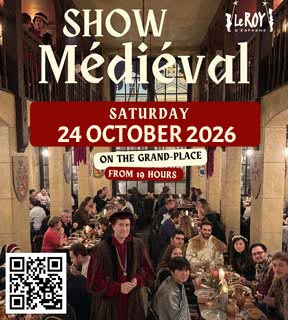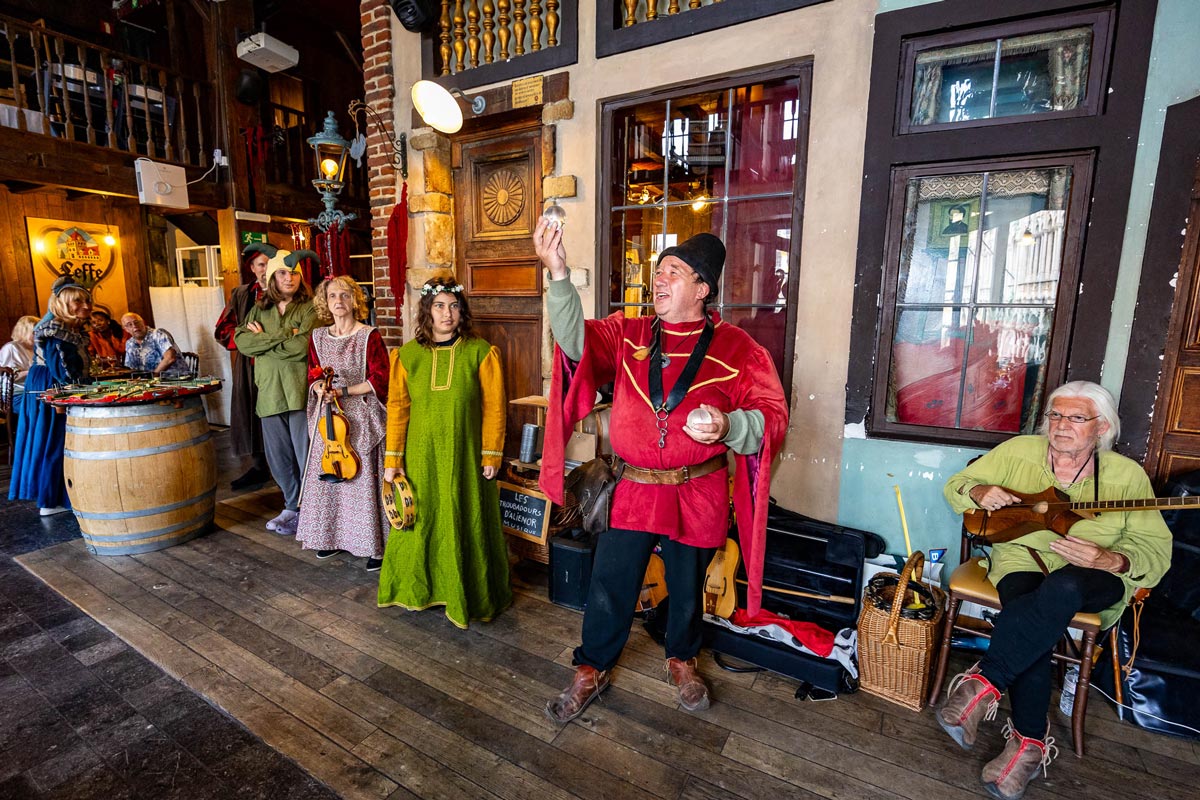
Once a month, Le Roy d’Espagne changes century without changing address. The lights soften, period costumes replace the usual service uniforms, and Charles V holds court again in the heart of the Grand-Place. This medieval dinner brings together a full meal, live musicians, jugglers and characters who move from table to table to keep the evening alive.
This banquet is neither a play watched from a distance nor a simple meal in fancy dress. It runs on participation, somewhere between spontaneous dancing, card tricks and a chat with Isabella of Portugal herself. Here is how one of these evenings unfolds, who you will meet, what lands on your plate and everything worth knowing before you book.
What the medieval banquet actually is
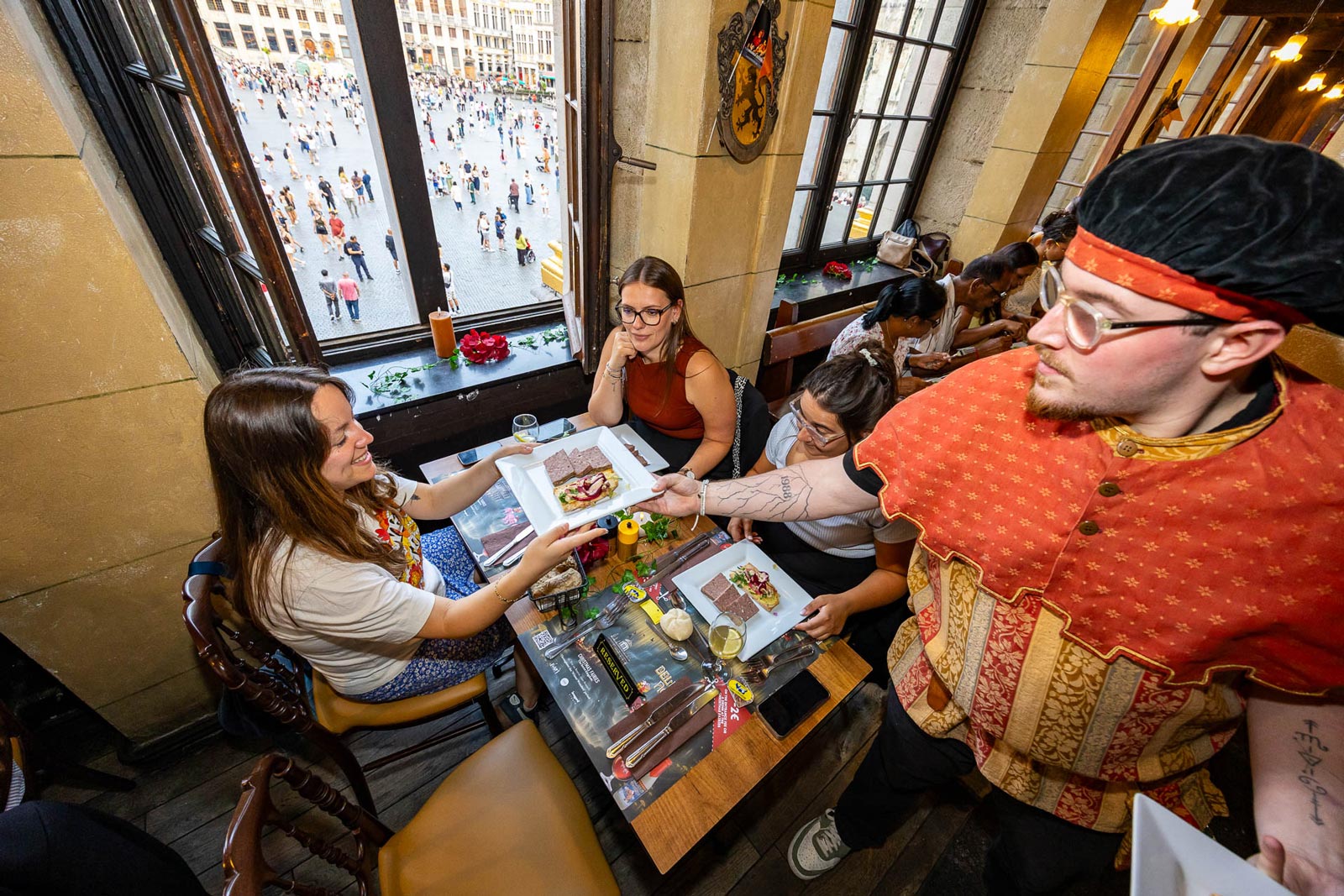
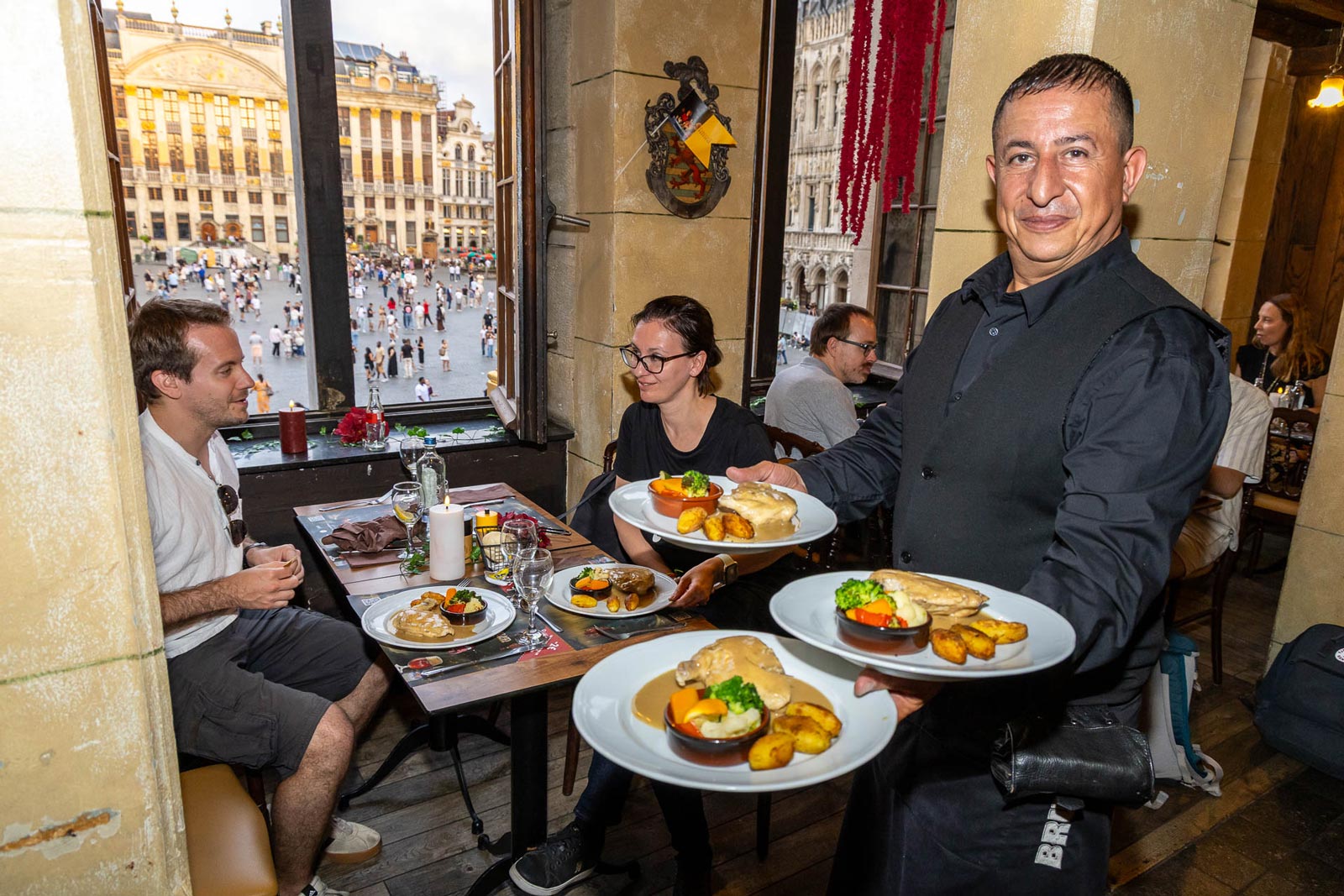
The medieval dinner at Le Roy d’Espagne is a monthly event held one Saturday a month, running until January 2027, in the brasserie’s upstairs rooms overlooking the Grand-Place, the UNESCO listed main square of Brussels. Unlike a cabaret show where you stay a spectator at your table, this medieval format runs on constant interaction between the costumed staff, the performers and the guests.
The idea pairs a full meal with a living performance, carried by musicians, jugglers and historical figures who mingle with the tables throughout the evening. It suits locals curious about an immersive night out just as much as visitors who want to leave Brussels with a memory that sticks.
How the evening unfolds
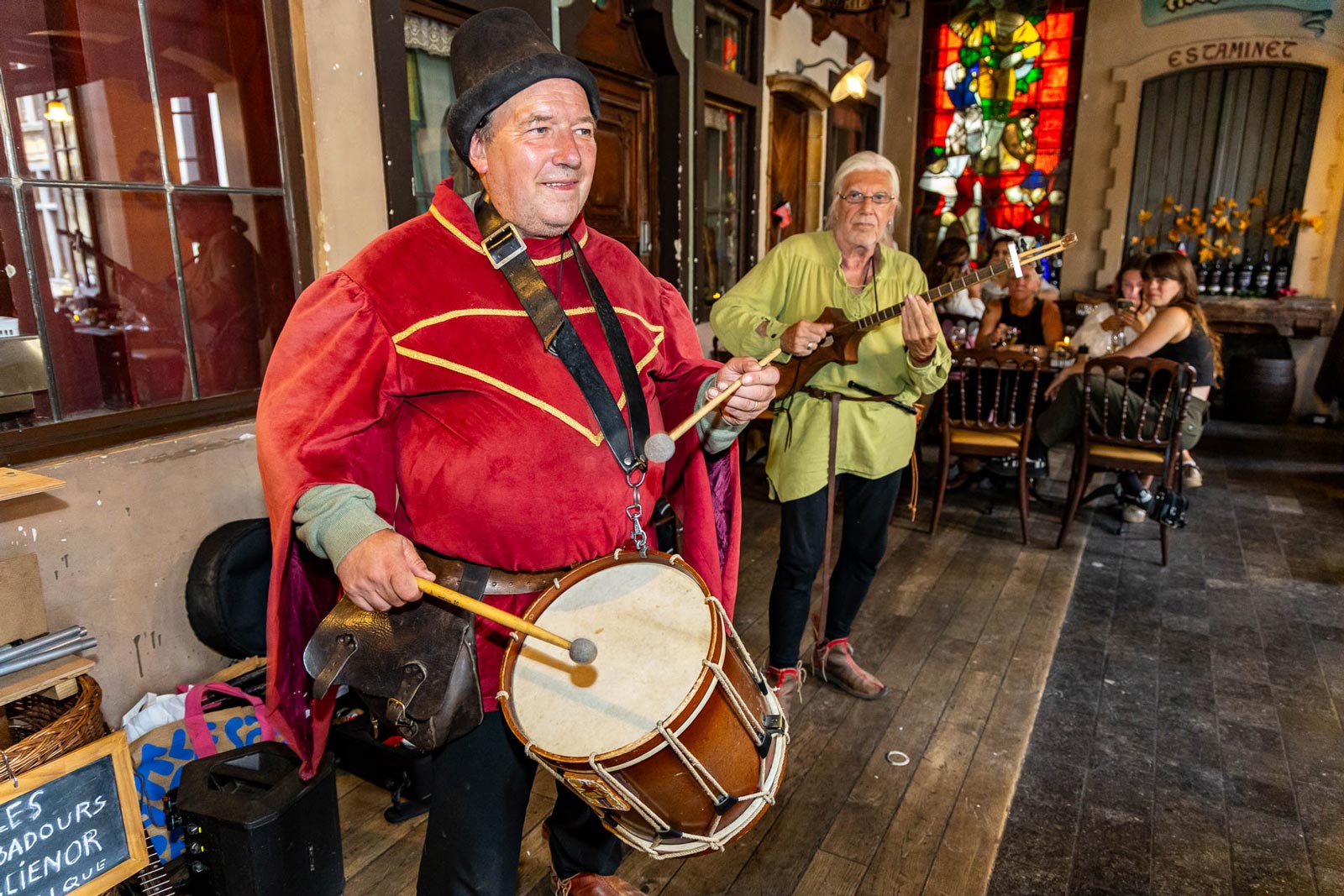
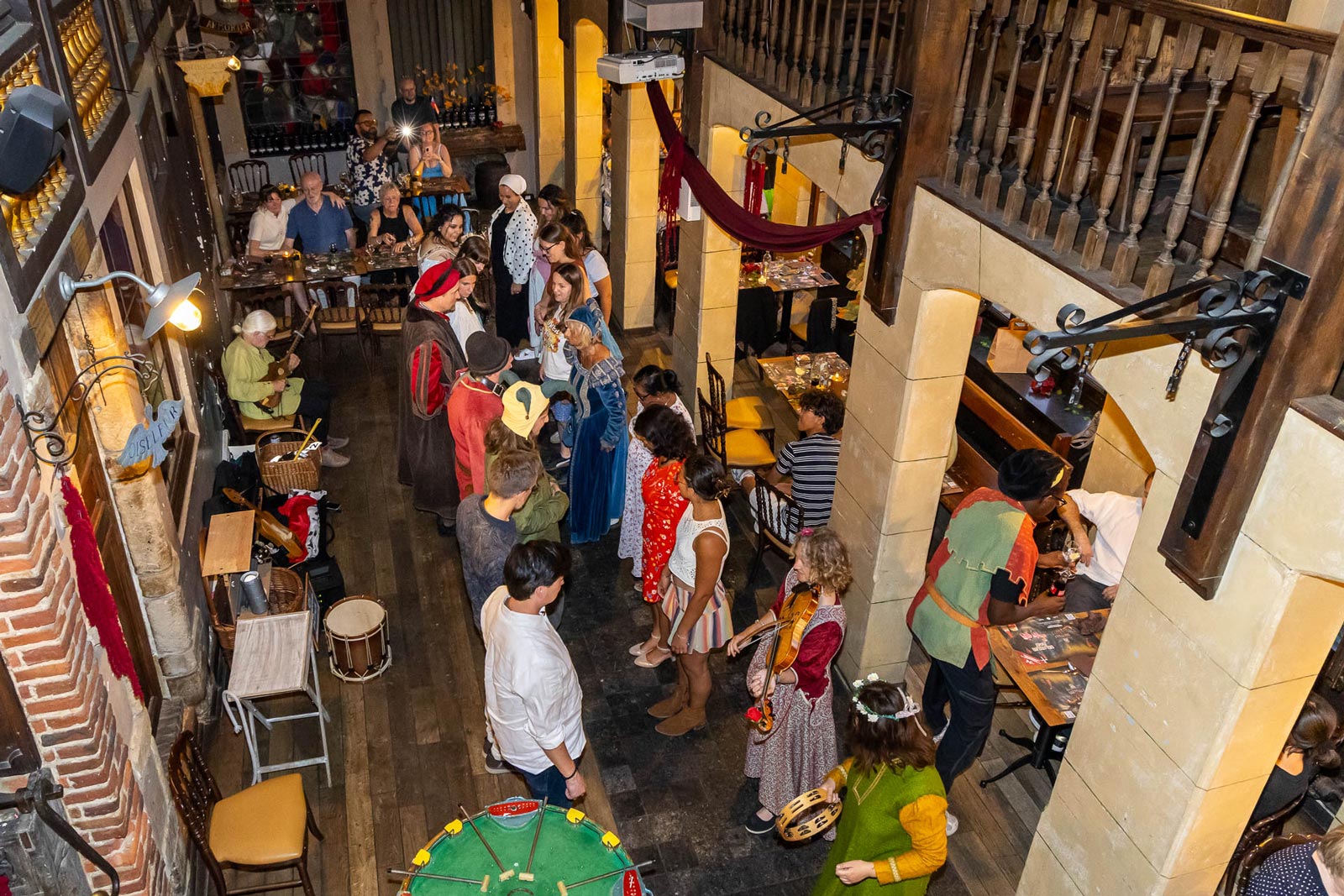
A typical evening starts with guests walking into an atmosphere that is already up and running, background music and staff in period costume from the doorway onwards. The meal then comes in three courses, broken up by entertainment at the tables and by more collective moments where the whole room joins in.
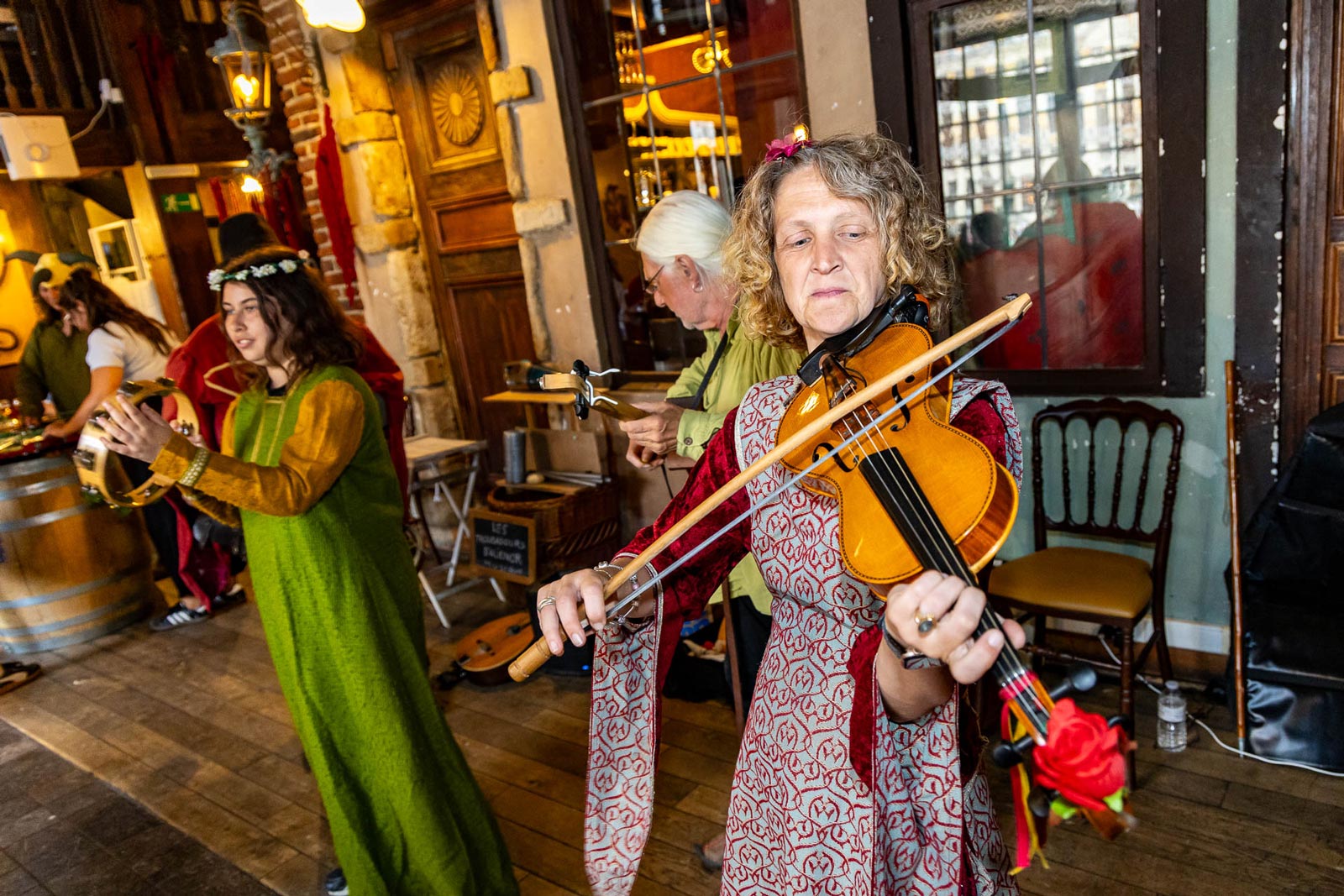
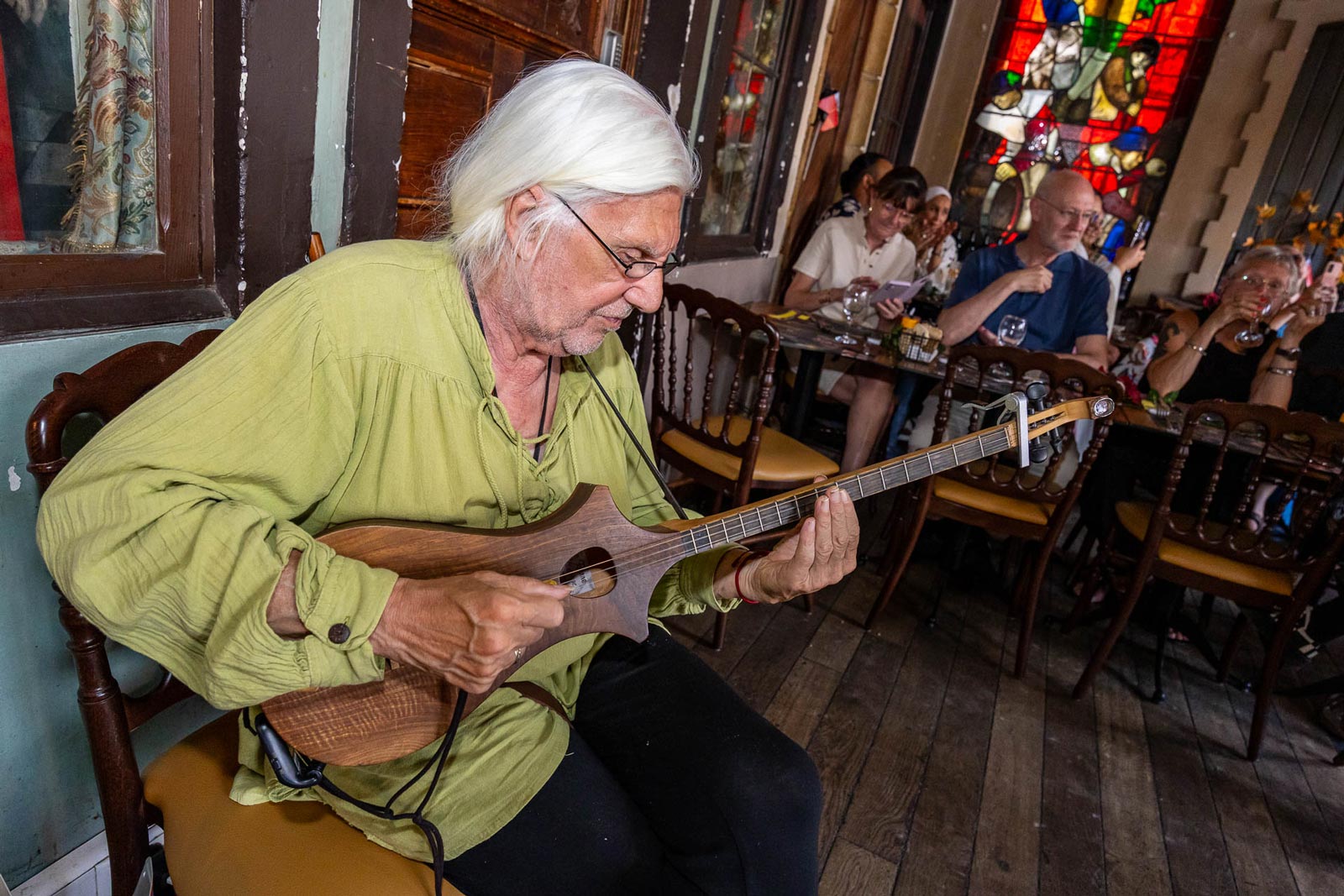
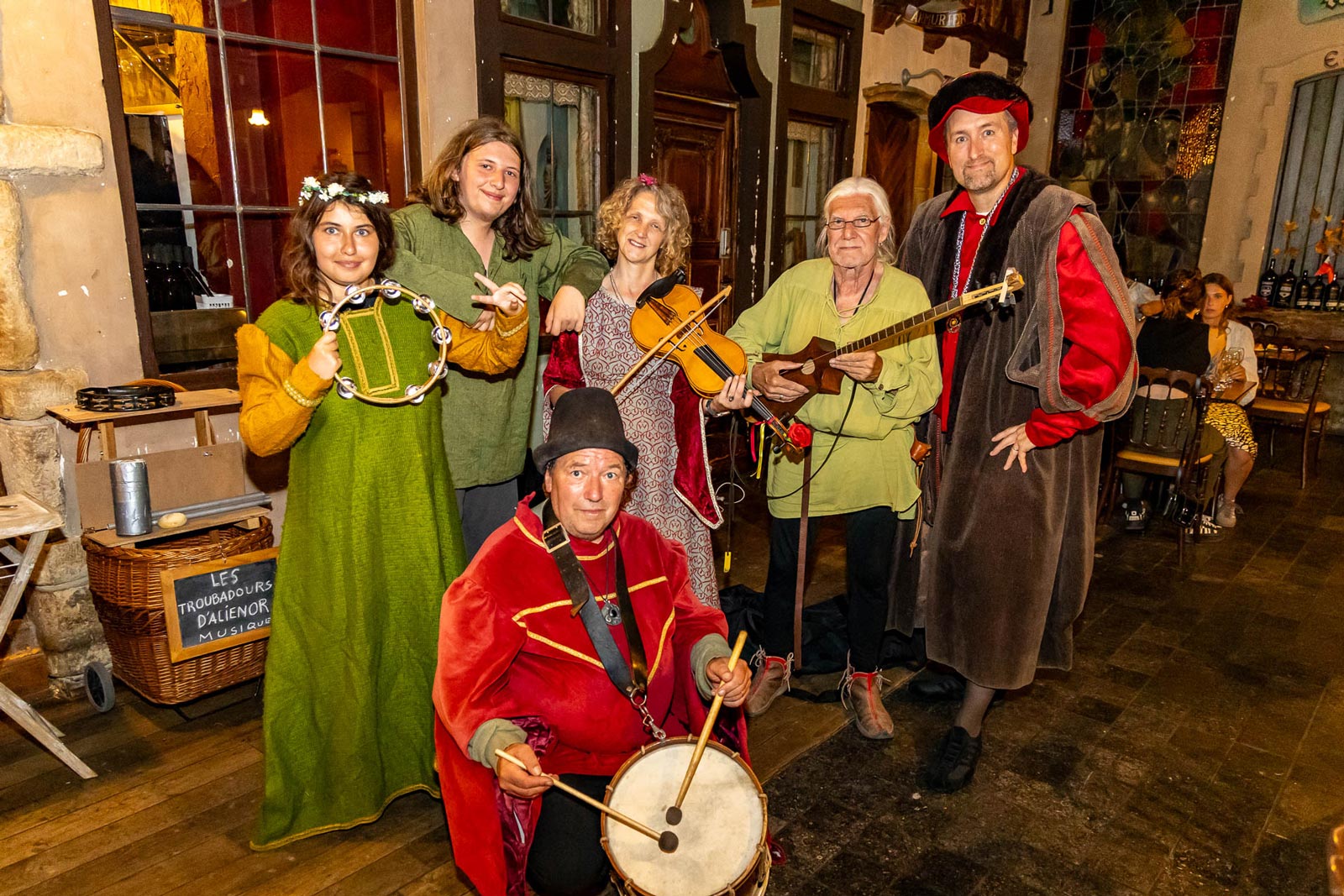
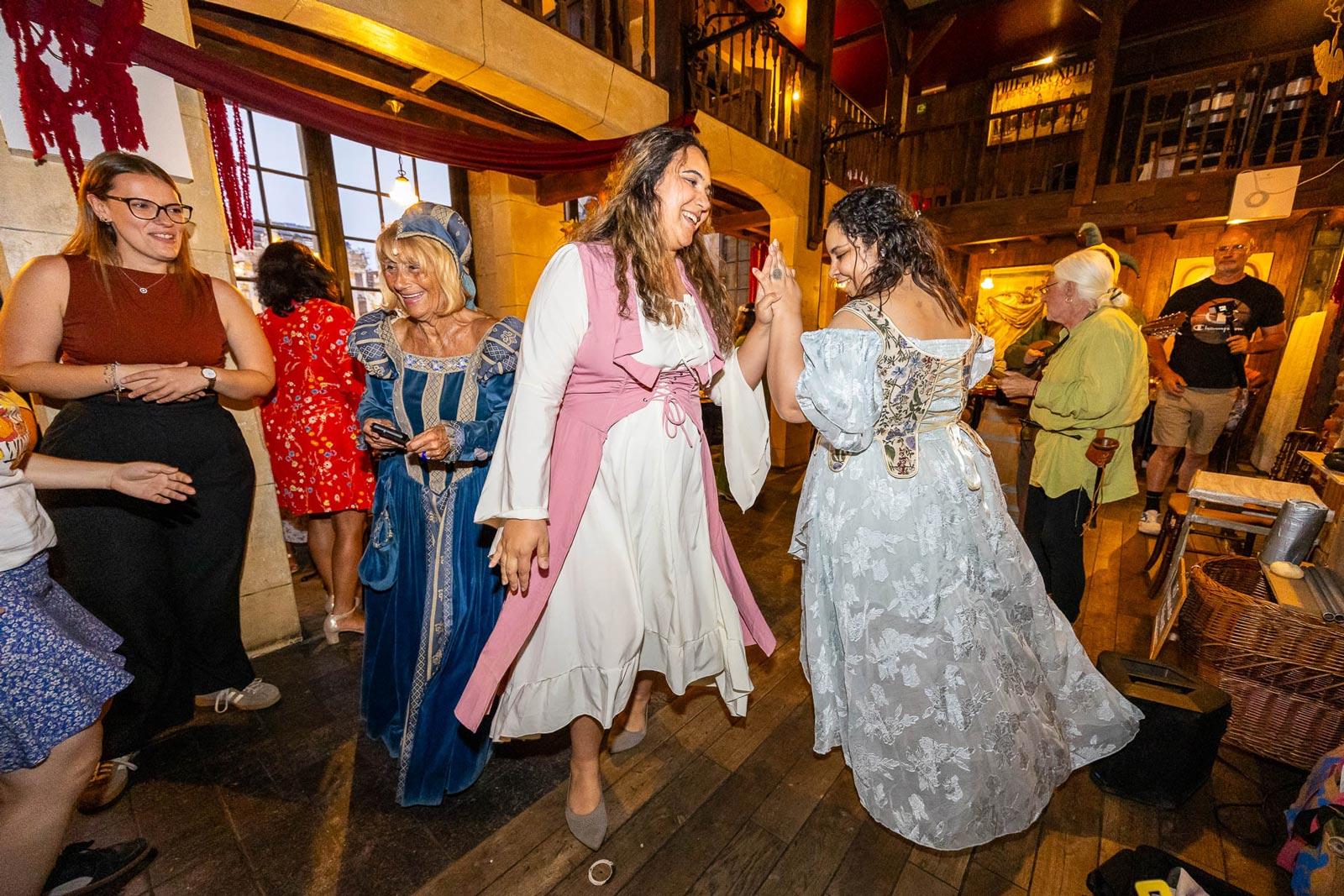
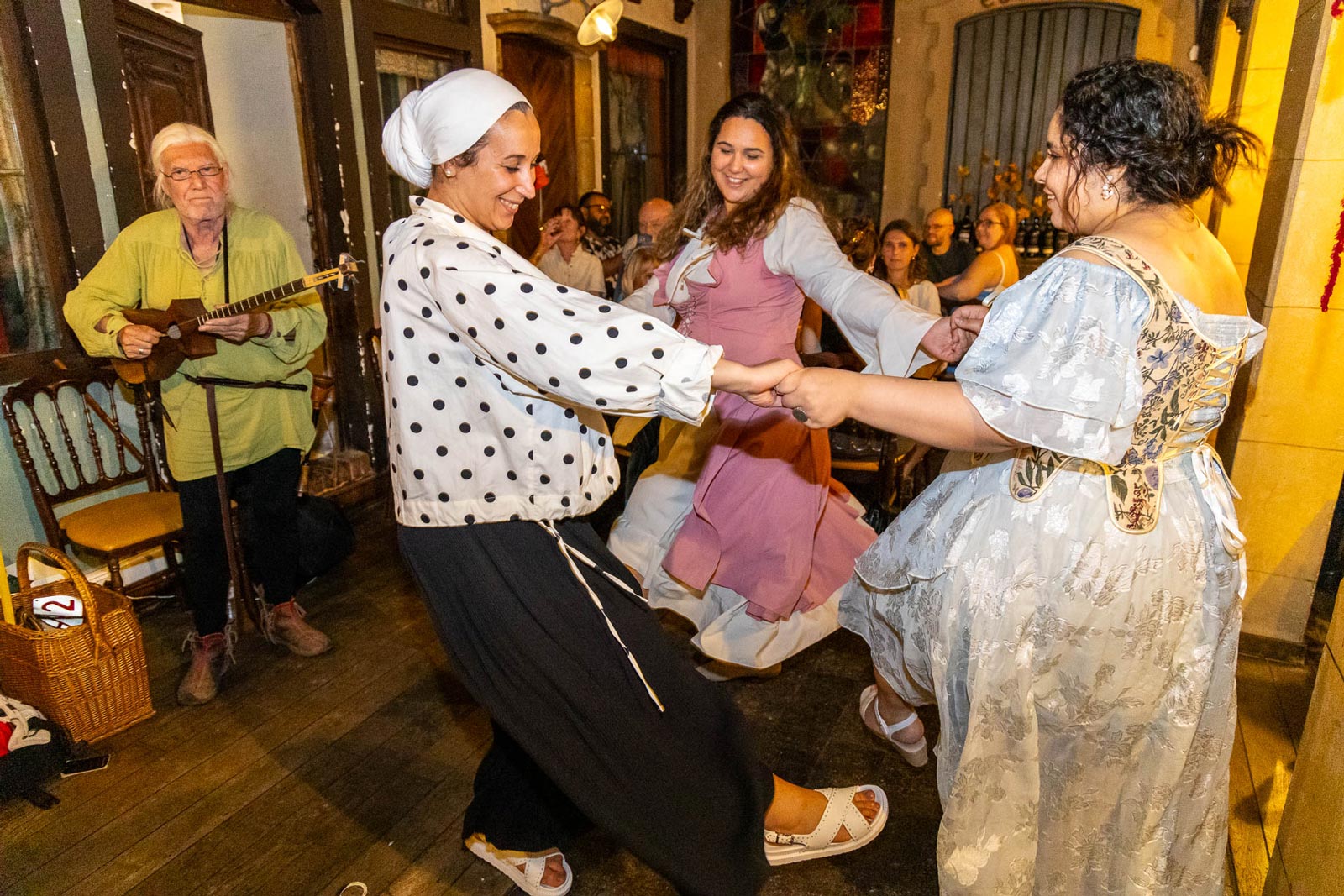
Music sits at the centre of it all, played live by costumed musicians several times during the night. A dance floor welcomes both the choreographies suggested by the team and the more spontaneous impulses of guests who get carried away by the drum and the fiddle.
Here are the main moments you can expect as the evening goes on.
- Welcome: the atmosphere hits you the moment you walk in, with the staff already in costume.
- A three course meal: paced by the characters doing their rounds and by table side entertainment.
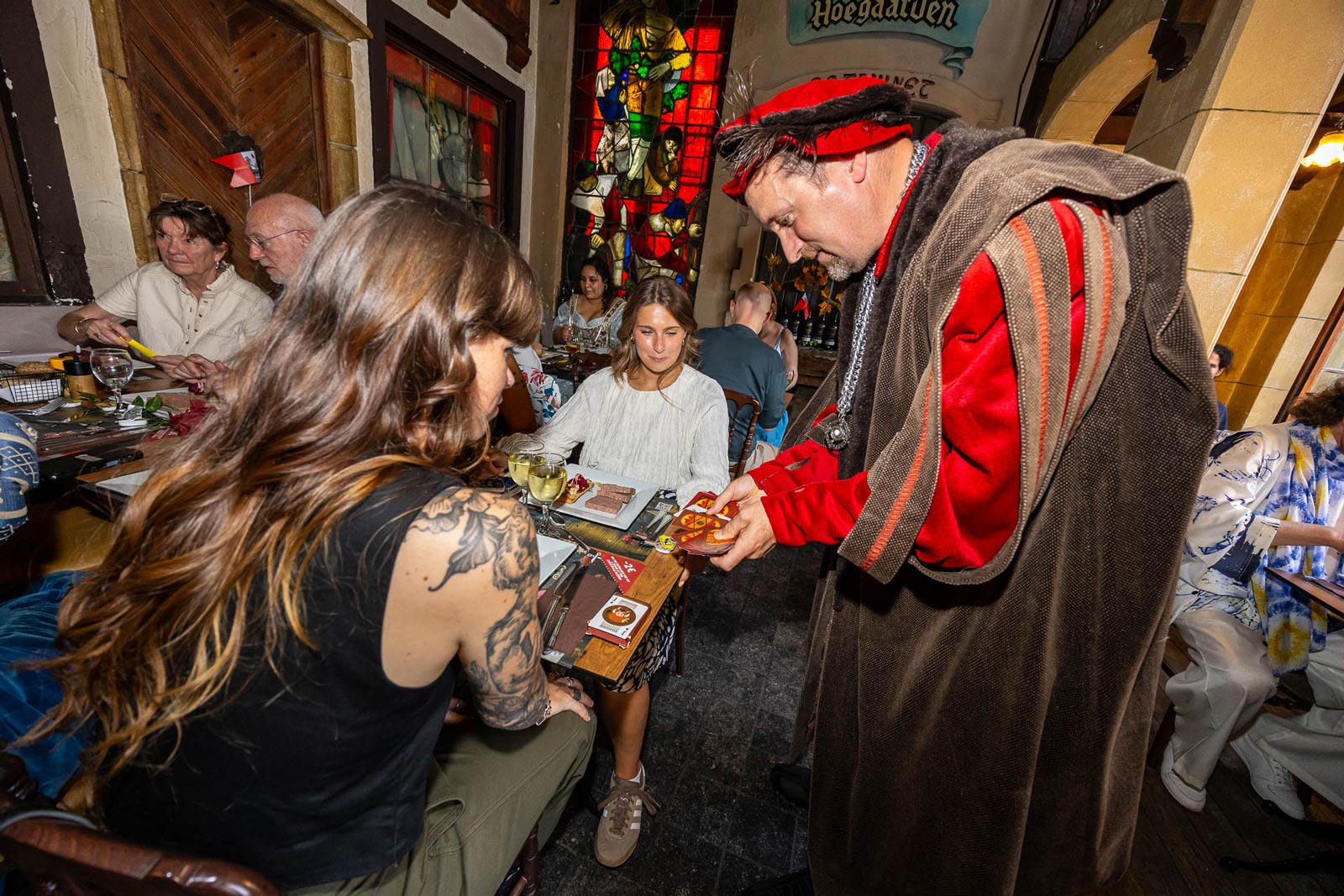
- Interaction: card tricks, magic and a good dose of humour delivered straight to your table.
- Music and dancing: live sets throughout the night, organised dances and spontaneous ones.
- Wrapping up: dinner usually ends around 10pm, and the room empties gradually until about 10.30pm.
The characters and the entertainment
Four figures come back regularly to give the evening its shape, on top of the performers moving between the tables.
Charles V and Isabella of Portugal
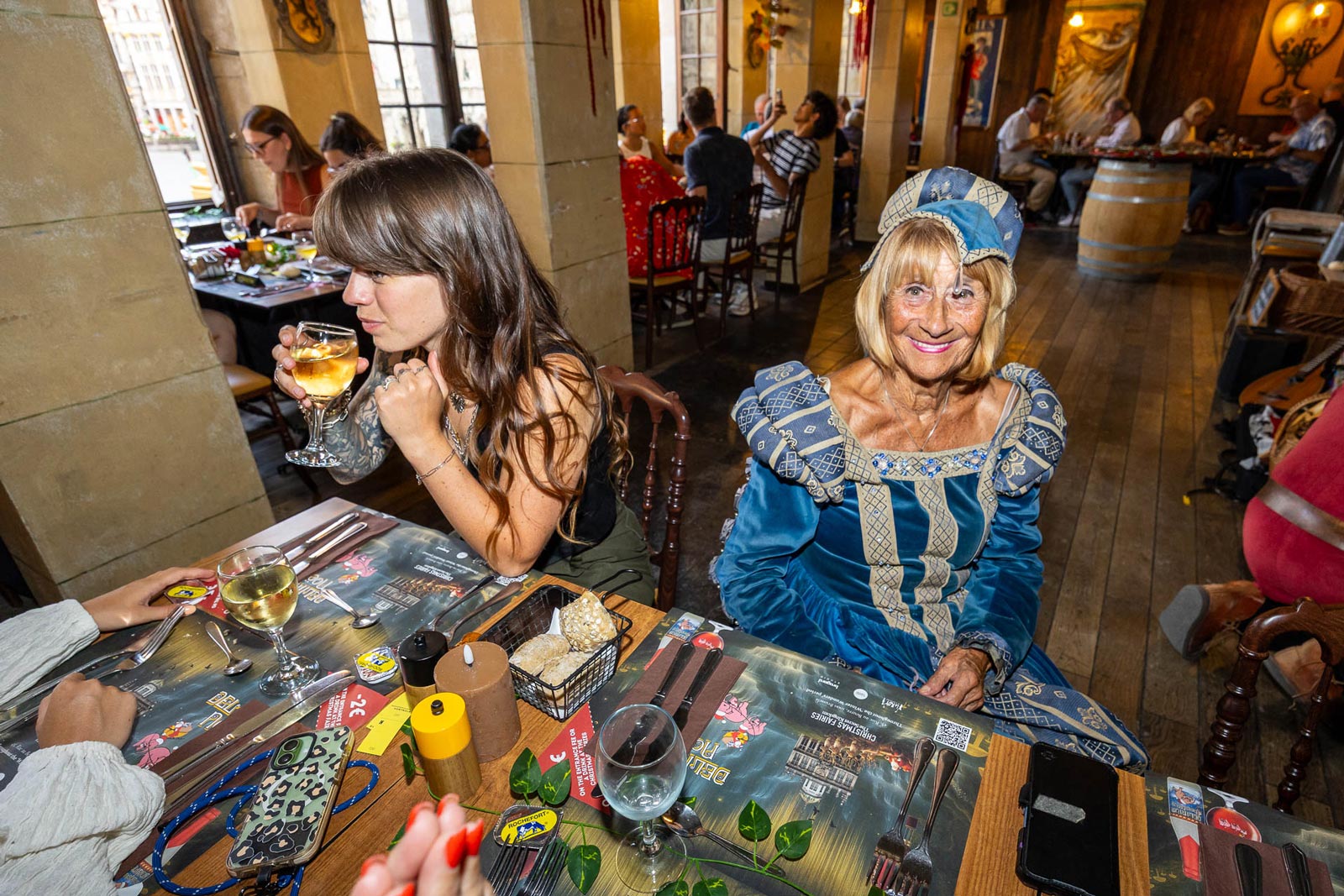
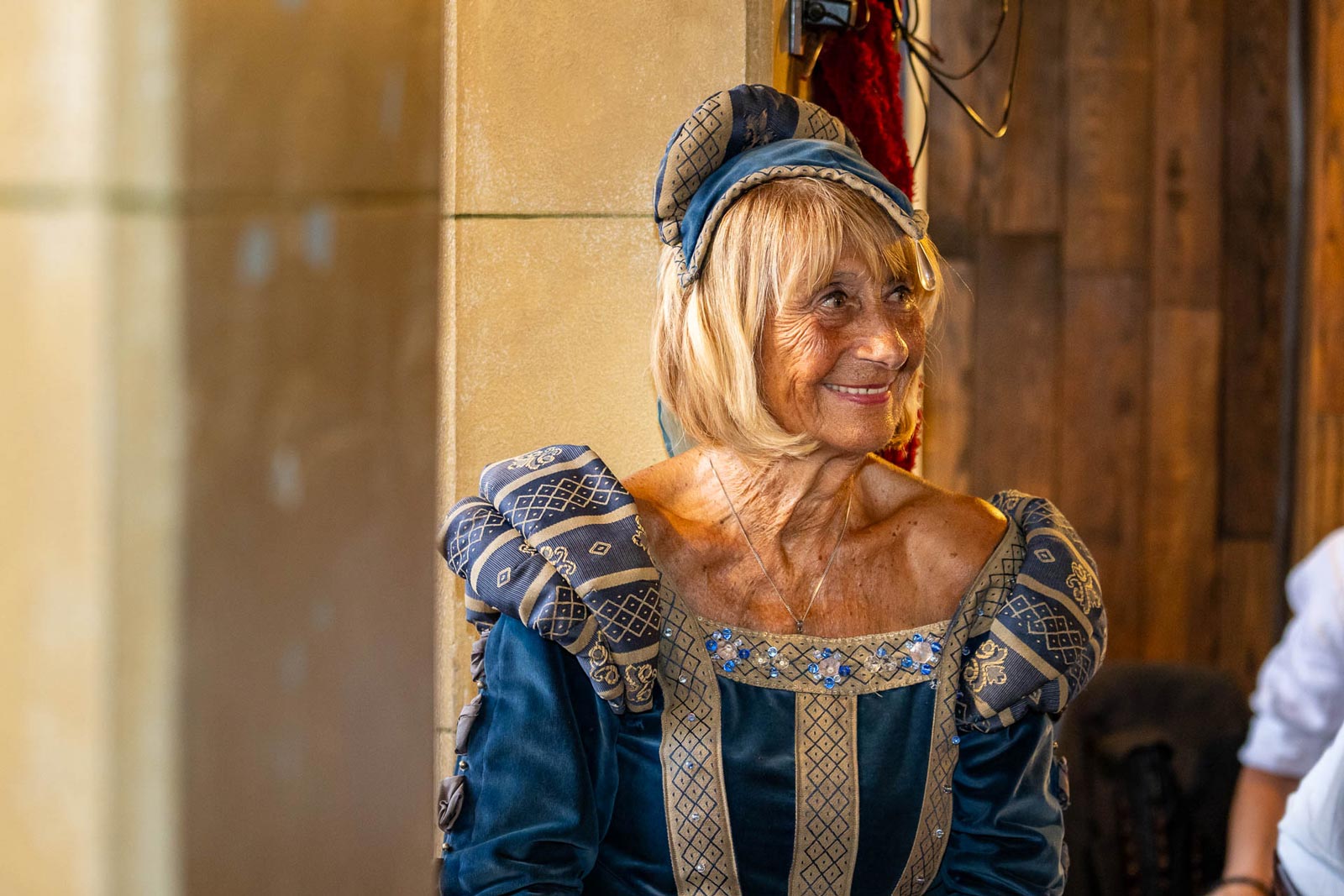
The emperor and his wife appear at every edition and make themselves available for a few words with the guests, a joke and a photo between courses. Their presence anchors a good part of the interaction, especially during the collective moments.
The court jester
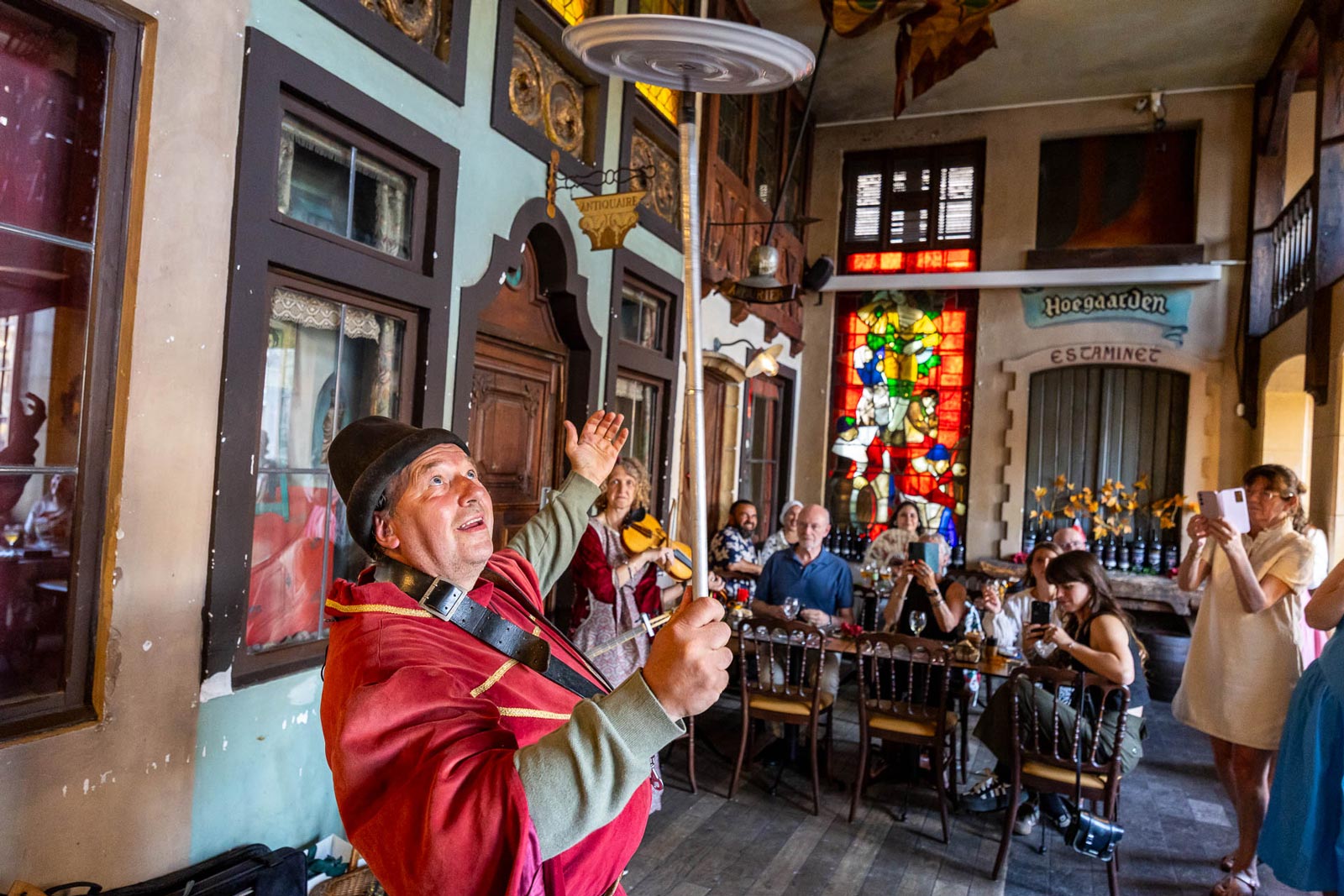
Also there at every edition, he carries most of the humour and the lighter energy of the night, somewhere between clowning around and friendly teasing aimed at the tables.
Larastral the fortune teller
This character sometimes completes the line up, though she is not there every time. Seated at her own table, she welcomes guests curious to find out what the cards laid in front of them have to say about the future.
Between the characters doing their rounds, jugglers and musicians fill the space, and various one off acts punctuate the courses without ever turning dinner into a show you simply sit and watch.
What is on your plate
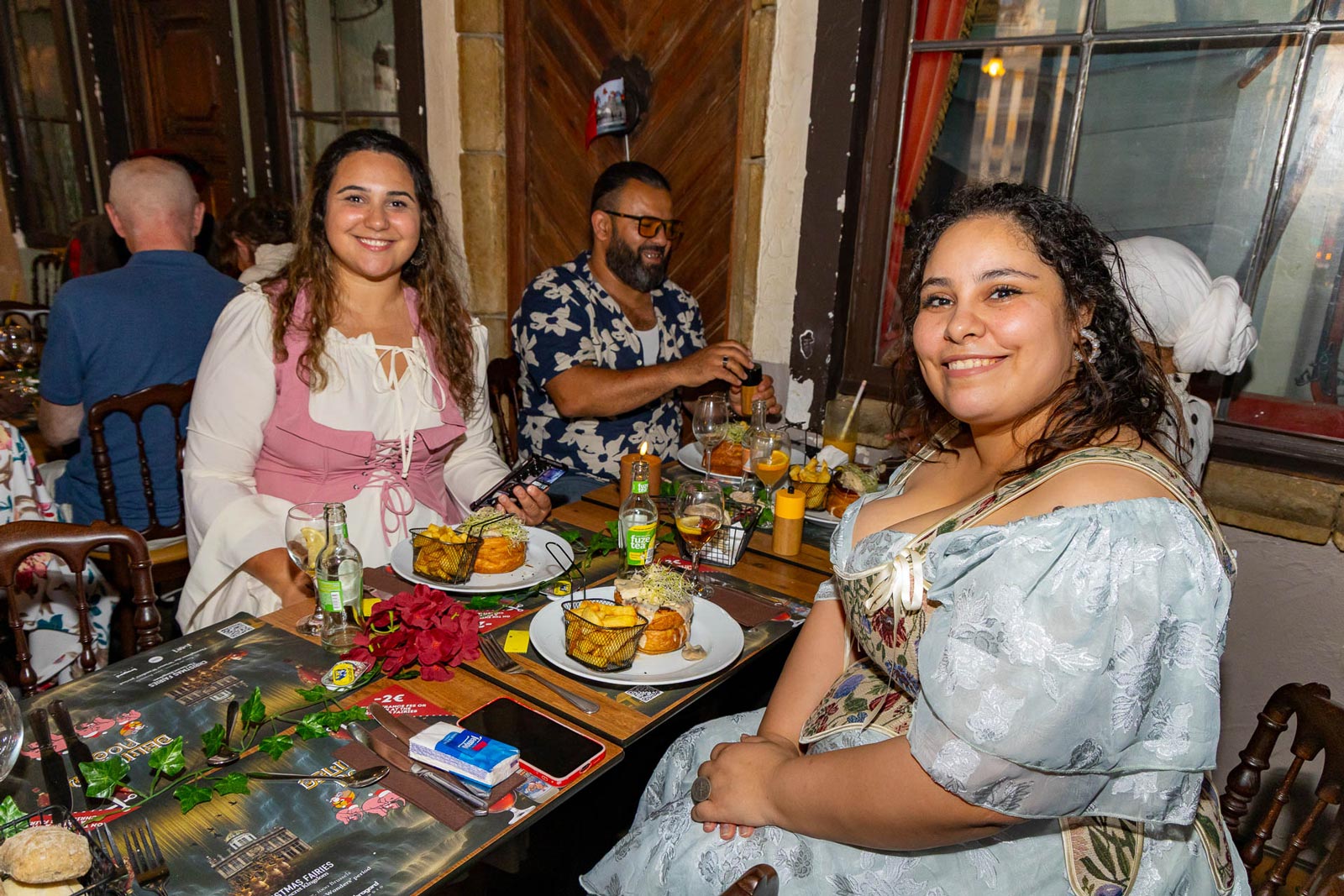
The menu changes every month, which lets the kitchen keep things interesting while sticking to one principle, a full three course meal with two drinks included. The theme stays the same throughout, a medieval inspired kitchen, simple and generous, built to capture the spirit of an old banquet rather than to recreate one to the letter.
Past editions have served a rustic tart with caramelised onions and aged Chimay cheese, ham braised in Belgian beer and honey, and choux buns filled with coffee cream. Enough variety to keep you coming back without ever eating the same dinner twice.
The hammer game, an old estaminet tradition
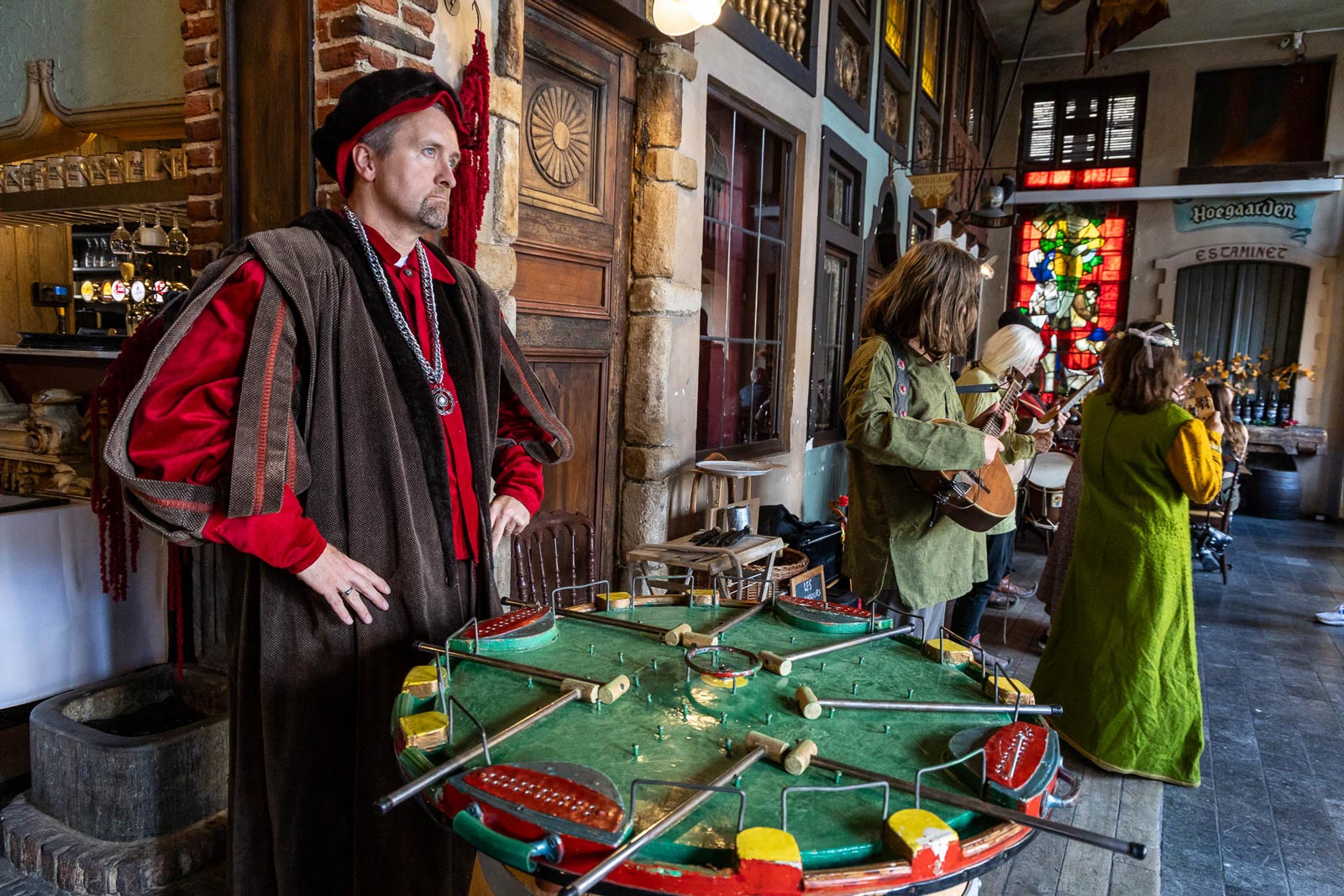
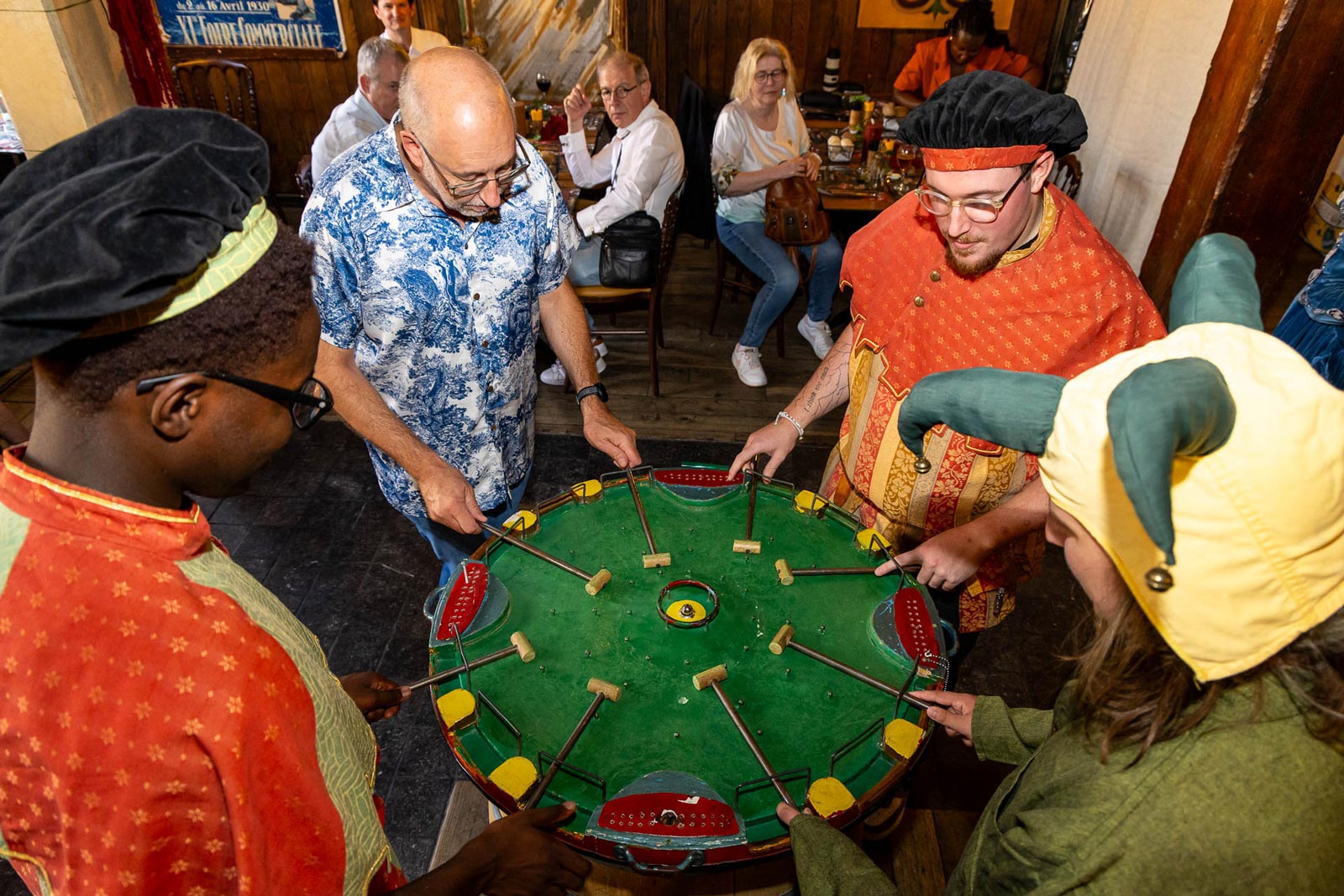
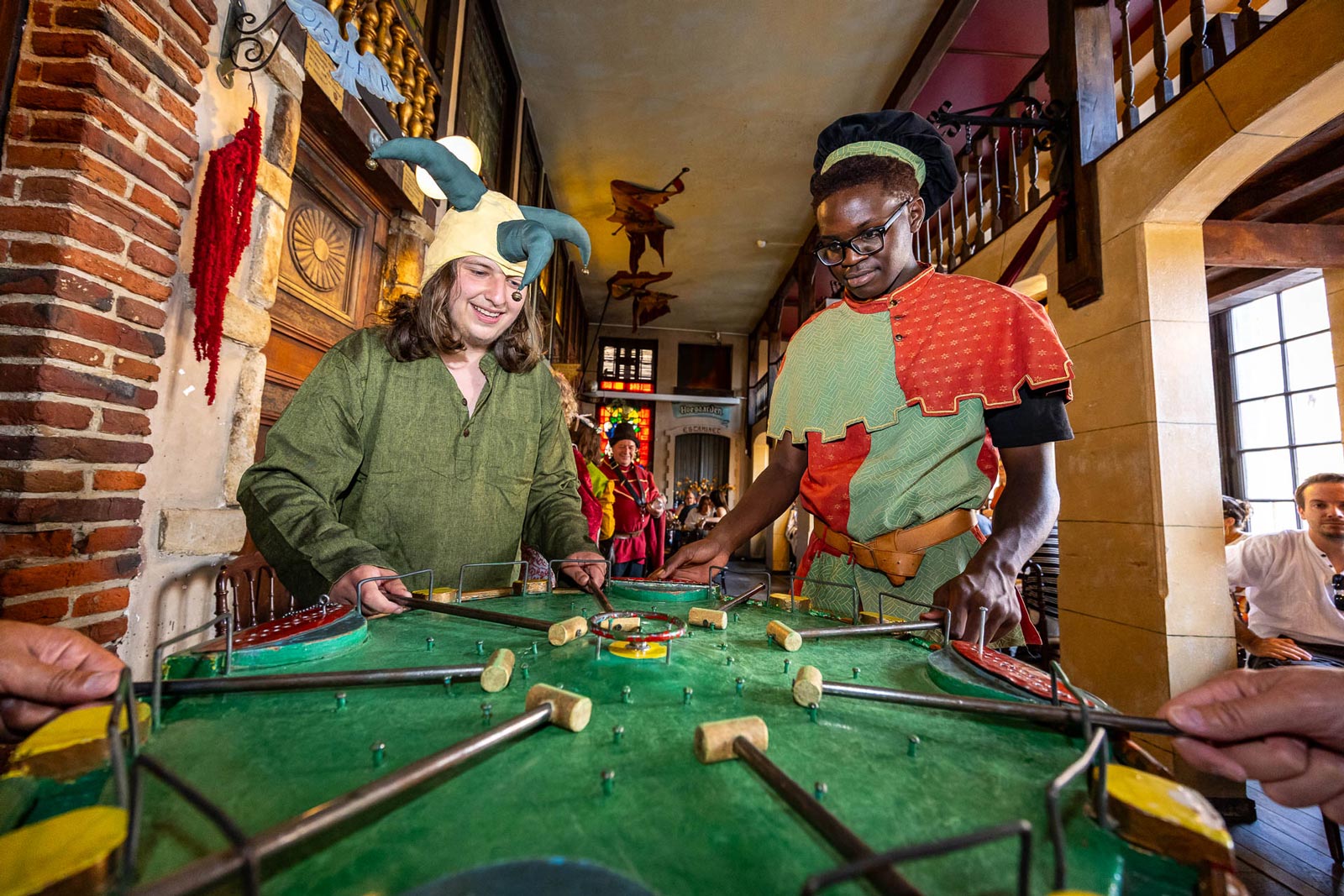
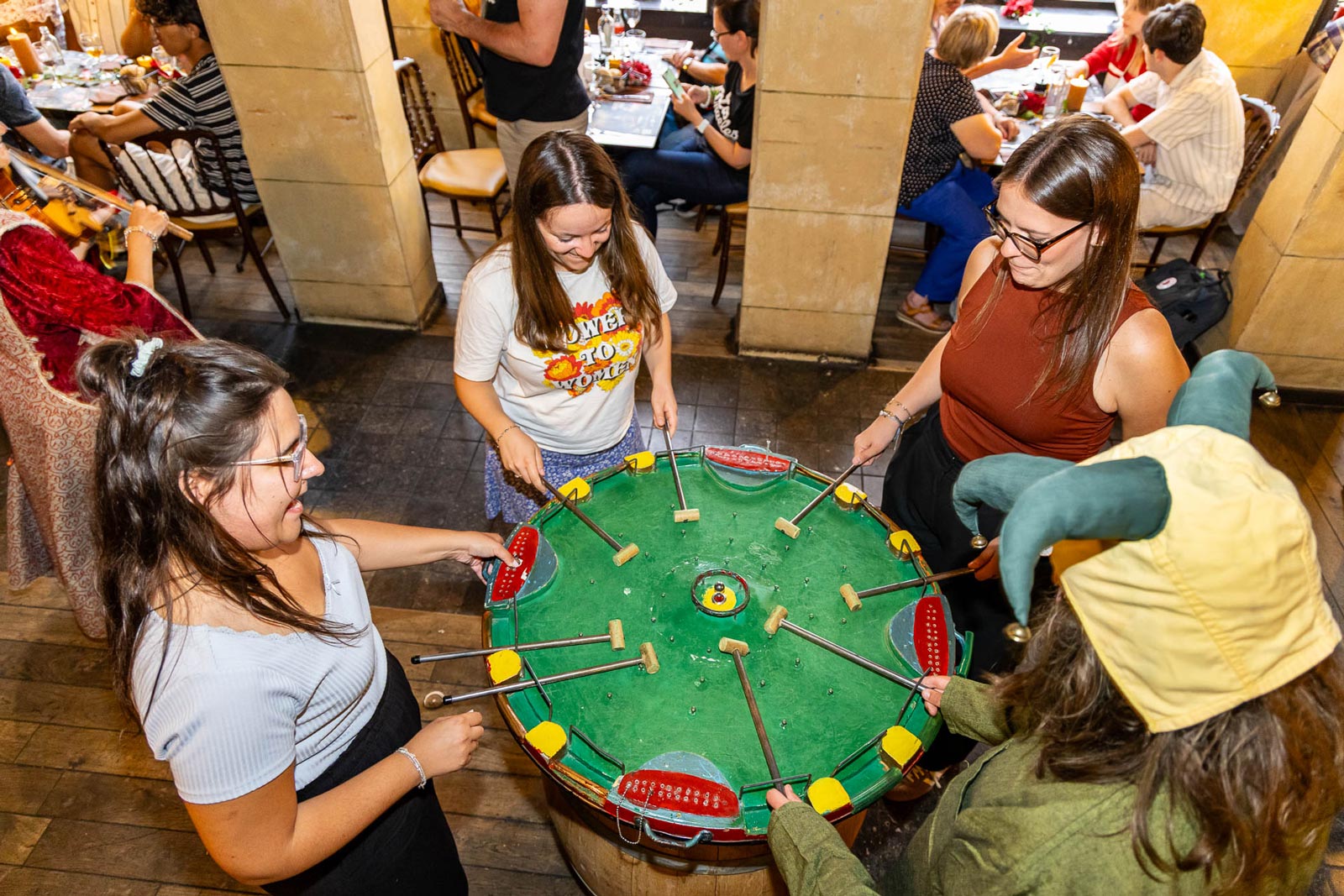
This wooden game is one of the classics you once found in the estaminets (traditional pubs) of Belgium and northern France, where it also goes by the name Hamertjesspel on the Flemish side. The principle is simple, each player defends a goal with two little hammers and tries to knock a steel ball into someone else’s camp, until one of them runs out of points.
Around the round table, guests and costumed characters happily gather for a game between courses, hammers in hand. The mood leans much more towards fun than towards serious competition. A friendly reminder that these evenings are something you take part in, not something you just watch.
Practical information
Here is what you need to know before booking your seat.
- Price: 60 euros per person, plus a 0.99 euro booking fee.
- Recommended age: open to everyone, though better suited from around 6 years old.
- Booking: seats are sold online, and previous editions have all sold out quickly.
Exact dates change from one month to the next, so the best way to find the next available slot is to check the booking page directly.
Frequently asked questions
- Do I need to wear a costume to join the medieval dinner?
- No, your usual clothes are absolutely fine, the period costumes are worn mainly by the staff and the characters. Nothing stops you from playing along and turning up in costume though, the atmosphere lends itself to it.
- Are drinks included in the price?
- Yes, two drinks of your choice are included, from Belgian beers (Stella, Blanche or Leffe) to house wines and alcohol free elixirs.
- How long does the evening last?
- Dinner starts in the evening and usually finishes around 10pm, with the room emptying gradually until about 10.30pm.
- How do I book a seat?
- Seats are booked online through the Fever ticketing platform, and booking well ahead is wise given how successful previous editions have been.
- Is the music played live all evening?
- Largely yes, costumed musicians play several sets during the night, with a few recorded interludes over the speakers while they catch their breath.
Conclusion
The medieval dinner at Le Roy d’Espagne is less a show than a parenthesis, where the service turns into costume and where the Grand-Place is watched from a sixteenth century window for one evening. Between the meal, the characters and the music, every edition keeps its share of the unexpected.
One thing stays the same from one edition to the next, guests wanting to stretch the night out on the dance floor long after dessert.
Fancy an evening out of time on the Grand-Place? Book your seat for the next medieval dinner now.