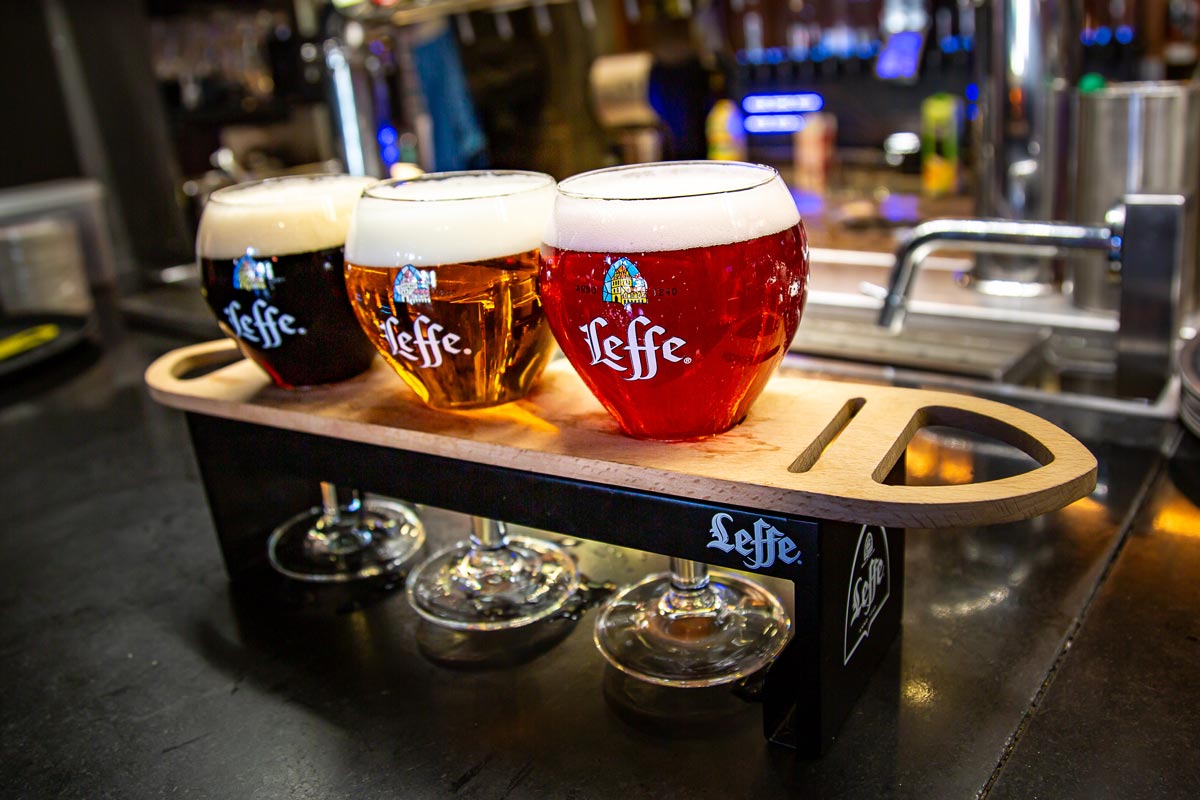
You walk into Le Roy d’Espagne on the Grand-Place and the server asks what you’d like to drink. Lager, witbier, amber, or dark? If your usual answer is something like “just a lager, please” without really knowing why, you’re not alone. But what exactly is the difference between a blonde beer, a dark beer, an amber, and a white beer? Behind those four colors lie very different taste profiles, shaped by centuries of brewing tradition, and few places in the world express that diversity as well as Belgium. Sorting beers by color is the most common approach, but it doesn’t tell the whole story: the real answers lie in the malt and how it’s processed.
It all starts with the malt
The color of a beer is no accident. It is directly linked to how the malt is heat-treated, meaning how the barley grains (or other grains) are processed before brewing. You start with a pale malt, barely heated, for the lighter styles; the longer and more intense the heat, the darker the grain becomes, and the darker the beer will be. The “robe,” a term beer lovers use to describe a beer’s color, directly reflects this preparatory work.
Think of it like toasting bread. A lightly golden slice of toast gives you a blonde beer. Push the heat a little further and you get something closer to brown bread, which is your amber. Go all the way to a very dark, almost charred piece of toast, and you’re in dark beer territory. Each stage develops different flavors, which is why these beers taste so different even when they come from the same brewery.
Blonde beer, the world’s favorite
Blonde beer is by far the most consumed beer style in the world. Its pale malt is lightly heated, giving it that characteristic golden color. The aromas are generally floral and slightly herbal, with a subtle bitterness from the hops. It’s an approachable style that isn’t trying to surprise you; it’s there to refresh and please as many people as possible.
In Belgium, the word “blonde” covers a much broader reality than in most countries. The differences between blonde beers can be enormous depending on the recipe: between a light, thirst-quenching pils and an abbey tripel pushing past 9% ABV, the golden color is the only thing they have in common. What you actually taste in the glass is a completely different story.
A great match at the table
Its lightness makes it an ideal companion for an aperitif or for delicate dishes. It pairs particularly well with white meats, fish, semi-hard cheeses, and light charcuterie. It doesn’t overpower the food, which makes it a versatile choice throughout the meal.
It’s also worth mentioning pale ale, a pale beer style with a more pronounced hop character. Very popular in the craft beer movement, it delivers more bitterness and fruity aromas while keeping a golden to light amber color.

White beer, the wheat and spice beer
White beer is a genuine exception in the brewing world. Its production follows a different principle from every other beer style: its pale, milky color doesn’t come from lightly heated malt but from the use of unmalted wheat alongside or instead of the usual barley. The beer is not filtered before bottling, and the proteins from the wheat, combined with yeast particles in suspension, give it that unmistakable hazy appearance.
In Belgium, witbier (“white beer” in Dutch) is a historic specialty. It is traditionally brewed with coriander and Curaçao orange peel, which gives it those spicy, fruity, and slightly tart notes it’s known for. Hoegaarden is arguably the most famous example of this style in the world.
Belgian witbier and German weizen, two very different cousins
Belgian white beer is often confused with the German weizen (or hefeweizen), but the two have little in common beyond wheat and top fermentation. The Belgian witbier gets its spicy, fruity aromas from herbs and orange peel added during the brewing process. The German weizen, on the other hand, is brewed without spices, following the purity law known as the Reinheitsgebot: its characteristic banana and clove aromas come entirely from the yeast strains used. Two very different approaches, with results that are equally distinct.
Aromas that feel like summer
This particular aromatic profile, with its notes of citrus, coriander, and sometimes honey, makes white beer an ideal choice for warm months. Its fruity and spiced flavors pair well with raw vegetables, seafood, mild cheeses, or fruity desserts. If you’re introducing someone to beer for the first time, white beer is often the best place to start: light, fragrant, and low on bitterness. Some breweries now also offer non-alcoholic versions of this style that retain most of its characteristic flavors.

Amber beer, the underrated middle ground
Amber beer occupies a particular spot in the brewing spectrum, often overlooked by drinkers who hesitate between a blonde and a dark beer without fully understanding what sets them apart. Its “caramel” malt, roasted at an intermediate temperature and treated differently from pale malts, develops characteristic aromas of caramel, hazelnut, dried fruit, and sometimes toasted bread. Its copper-colored robe, somewhere between the gold of a blonde and the deep brown of a dark beer, is as pleasant to look at as it is to drink.
If you’re deciding between a white beer and an amber to go with a meal, the amber is generally the more versatile of the two when it comes to heartier dishes. In Belgium, this style was once very common before losing ground to the wave of blonde and white beers. A few references are still going strong, like Palm or De Koninck (the famous “bolleke” from Antwerp), round and slightly sweet, with a moderate bitterness that never takes over.
The ideal match for hearty dishes
It’s at the table that amber beer really shows what it can do. Its roundness and malty aromas make it an ideal partner for grilled meats, slow-cooked dishes, beef stew braised in beer, and washed-rind cheeses. It handles spices and heat well, which makes it interesting alongside slightly bolder cuisines.

Dark beer, for those who love depth
Dark beer is the result of a long and intense malt roasting process. This intense roasting process develops deep aromas of coffee and chocolate, burnt caramel, and sometimes licorice. On the palate, it often has a velvety texture and a bitterness that can be more pronounced than its counterparts, though this varies considerably depending on the style and the recipe.
It would be a mistake, however, to treat it as a single category. Belgian dark beers vary enormously from one brewery to the next. Some are soft and round, almost sweet, while the drier, more bitter dark beers play in a completely different register. Irish stouts, British porters, and Belgian abbey dubbels all belong to this broad family, but they have very little in common once you’re actually drinking them.
A common misconception
Dark beer is often associated with high alcohol content, but that’s a misconception. Alcohol level depends on fermentation and the sugars used in the recipe, not on color. A dark beer can easily come in at 4% ABV, just as a lager can push past 7%. The confusion probably comes from the fact that powerful dark beers, like certain Trappist ales, have a way of sticking in the memory.
Here are some particularly successful pairings with a dark beer:
- Slow-cooked dishes: beef stew braised in beer, rabbit in beer, beef cheeks; every sauce-based dish pairs naturally with the caramelized aromas of a good dark beer.
- Cheeses: blue cheeses (Roquefort, Gorgonzola) and washed-rind cheeses bring a saltiness that contrasts nicely with the malty sweetness.
- Desserts: chocolate fondant, spiced cookies (speculoos, gingerbread); dark beer behaves almost like an ingredient in its own right.

Fruit beers, from pink to red
Red and rosé beers are probably the most overlooked category in any conversation about beer colors. Yet they deserve their place in this overview, and not just because they look stunning in the glass. In these beers, fruit plays a decisive role in both color and aroma: from pale pink to deep cherry red, it’s the fruit that colors, perfumes, and transforms the beer into something unique. In Belgium, this style is closely tied to the lambic tradition and to fruit refermentation, a brewing technique that Belgium has made its own.
Kriek is the most well-known example: a lambic refermented on sour cherries, traditionally the griotten of Schaerbeek, which give it that deep red color and those fruity, slightly tart aromas. Framboise follows the same principle with raspberries, for a pinker, softer result. Beyond these two pillars, there is a broader family of fruit beers, made with blackcurrant, peach, elderflower, or other fruits, that don’t necessarily rely on lambic or traditional refermentation. These variants are often more accessible, but also less complex.
What makes this style particularly interesting is that it often wins over people who thought they didn’t like beer. The bitterness of hops is almost absent, replaced by a fruity acidity that can range from dry and sharp, in traditional unsweetened krieks, to soft and round in more commercial versions. At the table, they pair surprisingly well with dark chocolate desserts, fresh cheeses, red fruit tarts, or simply as an aperitif on a warm summer evening on the Grand-Place.

Summary: the five styles at a glance
Here’s a quick overview of each style’s main characteristics. This table reflects general tendencies: in practice, every brewery makes its own choices, and the variations within a single style can be significant.
| Style | Color | Main aromas | Bitterness | Typical pairings |
|---|---|---|---|---|
| Blonde | Golden to pale yellow | Floral, herbal, grain | Light to moderate | Fish, poultry, mild cheeses |
| White beer | Hazy, milky | Citrus, coriander, honey | Very light | Seafood, raw vegetables, fruity desserts |
| Amber | Copper to light brown | Caramel, hazelnut, toasted bread | Moderate | Grilled meats, washed-rind cheeses |
| Dark | Dark brown to black | Coffee, chocolate, licorice | Variable, sometimes high | Slow-cooked dishes, blue cheeses, chocolate |
| Fruit beer (red/rosé) | Pale pink to deep cherry red | Cherries, raspberries, fruity acidity | Very low to none | Fruity desserts, fresh cheeses, aperitif |
Top, bottom, and spontaneous fermentation: another way to classify beers
Beyond color, beers also differ by their fermentation method: top, bottom, or spontaneous. This is a fundamental parameter that explains why two beers of the same color can smell and taste completely different, and why Belgian brewing tradition is so distinctive. Belgium is one of the few countries in the world that masters all three methods, most notably with lambic and gueuze, produced through spontaneous fermentation in the Senne Valley and the Pajottenland.
It’s a topic that deserves its own deep dive, and we’ve dedicated a full article to it. If you’re curious, we invite you to read it here: How is Belgian Beer Brewed?

Conclusion
Blonde, white, amber, dark, or fruit beer: each style tells a different story, and that story begins long before the beer reaches your glass. The choice of malt, the duration of heating, the type of yeast, the possible addition of spices or fruit, all of this shapes a unique aromatic profile. Color is the first clue, but rarely the only one.
What really matters is finding the beer that matches what you’re eating, how you’re feeling, and what you’re in the mood for. A cold witbier on a summer evening on the Grand-Place terrace, a round amber with a slow-cooked beef stew, a complex dark beer with a well-aged cheese: these aren’t rules, they’re pleasures. To go further, our article on the history of beer in Belgium traces eight centuries of brewing tradition and explains how this country became a global reference.
Our beer list was put together to reflect this diversity, with references carefully chosen to complement each dish on our menu. If you’d like to explore all of this around a table, browse our beer selection or check out our menu to plan your visit.
FAQ
- Does the color of a beer indicate its alcohol content?
- No. Color depends on how the malt is heat-treated, while alcohol content is determined by fermentation and the amount of fermentable sugars in the recipe. A dark beer can be very low in alcohol, and a blonde beer can be surprisingly strong.
- What is the difference between a blonde beer and a white beer?
- The difference is fundamental. A blonde beer uses mainly lightly heated barley malt and is generally filtered, giving it a clear, bright appearance. A white beer contains unmalted wheat and is not filtered, hence its hazy look. Their aromas are also very different: floral and lightly bitter for the blonde beer, spiced and fruity for the white beer.
- Why is white beer hazy?
- Because it is generally not filtered before bottling. The proteins from the wheat used in its production, combined with yeast particles in suspension, give it that milky, hazy appearance that’s part of its identity.
- Which beer style is the best starting point for beginners?
- White beer is often recommended as a gateway, since it’s light, low on bitterness, and very aromatic. A light lager (like a pils) is also familiar and easy to enjoy. To go a step further, amber beer offers more complexity without the intensity of a dark beer.
- What is a lambic beer, and what makes it so special?
- Lambic is a spontaneously fermented beer traditionally brewed in the Brussels region and the Pajottenland. No yeast is added deliberately. It is the wild microorganisms in the air of the Senne Valley that ferment the wort naturally, producing beers that are sour and highly complex. Gueuze is a blend of lambics of different ages, and kriek is a lambic refermented with cherries.
- How do I choose a beer to go with my meal?
- Light styles (white beer, light blonde) work best with delicate dishes like fish and seafood. Amber beers and fuller-bodied blonde beers pair well with grilled meats and cheeses. Dark beers are at home with slow-cooked dishes, meat in sauce, and chocolate desserts. Check out our menu to discover our beer and food pairings at Le Roy d’Espagne.