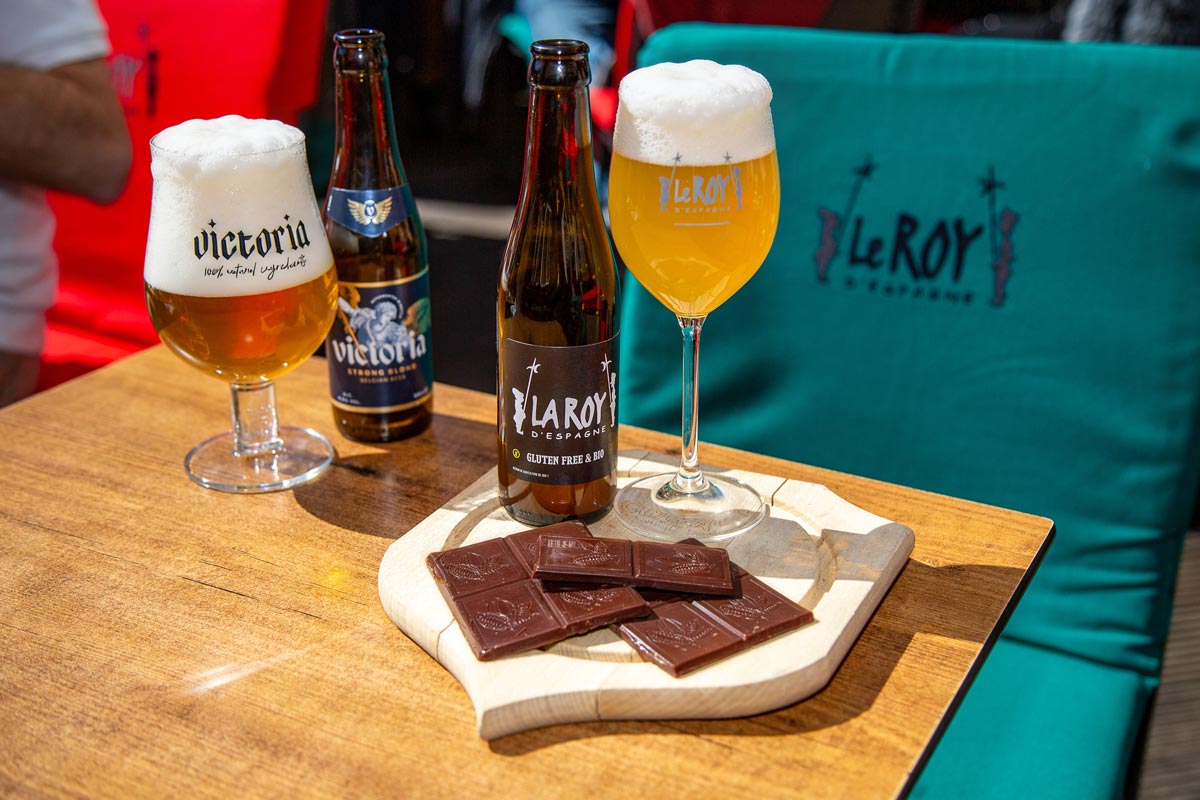
The chocolate and beer duo might seem surprising at first. We rarely think of ordering a beer when biting into a square of chocolate. And yet, this pairing works well, sometimes remarkably well. Belgium is one of the few countries in the world to excel at both disciplines at once, and it is no coincidence that these two products go so naturally well together. They share common flavours, an aromatic profile of rare richness, and that distinctly Belgian way of turning an ordinary moment into a small pleasure. In this article, we explain why the chocolate and beer pairing works, how to create successful combinations without going wrong, and which pairings are truly worth trying.
Chocolate and beer: two products with common flavours
At first glance, beer and chocolate have little in common. One is liquid, the other solid. But if you look a little closer, the aromatic similarities are striking, and they explain why the beer and chocolate pairing is as natural as it seems. Between the two, the connection is above all chemical, and it runs deeper than you might expect.
Roasting to reveal aromas: cacao and malt, the same battle
Cacao beans and barley malt both go through heating stages before reaching your glass or your chocolate bar. Malt is first kilned to stop germination, then some malts are roasted to develop more intense aromas. After fermentation and drying, cacao beans are also roasted. In both cases, these processes trigger a cascade of chemical reactions, most notably the Maillard reaction (which transforms sugars and amino acids into complex aromatic molecules). The result: aromatic notes of coffee, caramel, dried fruit or toasted bread, found equally in a square of dark chocolate with roasted notes and in a well-crafted brown ale. Cacao and malt thus build their rich flavours on the same foundations.
A craft brewer working with roasted malts and a chocolatier monitoring the roasting of their beans are, chemically speaking, doing very similar work. It is no coincidence that both professions share the same tasting vocabulary: roasted notes, roundness, length on the palate. The aromatic profile of cacao and that of malt are so alike that some beer sommeliers use the same descriptors as chocolatiers to describe their products.
Bitterness: the common ground that holds the flavours together
Dark chocolate and certain beers share a structural bitterness. Far from clashing, the two bitter notes complement each other: one softens the other, and together they create a balance on the palate that neither could have achieved alone. It is the same principle that makes coffee and chocolate such an obvious combination in desserts the world over. The key is that both partners share a comparable intensity, without one overpowering the other.
The 3 key principles for successful beer and chocolate pairings
Let us now look at the three key principles that guide the best food and beer pairings around chocolate. The basic principles are simple, and knowing them will help you avoid the most common mistakes.
The first is the resonance pairing: you choose a beer whose aromatic notes echo those of the chocolate. A brown ale with coffee aromas will naturally suit an intense dark chocolate, because they speak the same language. The second is the contrast pairing, where you play on opposites to create a surprise on the palate. A beer with acidic notes alongside a very bitter chocolate, for example, can produce spectacular results. The third principle, often overlooked, is that of intensity balance: a light beer will be overwhelmed by a powerful chocolate, just as a very sweet milk chocolate will drown the subtleties of a gueuze (a spontaneously fermented beer, dry and slightly acidic).

How to choose a beer to go with chocolate
The world of Belgian beers is vast, and the types available are numerous. To help you find your way, here is a quick guide organised by type of chocolate.
- Intense dark chocolate (70% and above): brown ales, stouts and dark beers are your best allies. Their roasted aromas and moderate bitterness echo the rich flavours of cacao. A well-malted amber ale also works very well if you are looking for something softer and rounder.
- Milk chocolate: opt for a Belgian blonde with sweet malt notes, or a barley wine (a strong, rich beer with aromas of caramel and dried fruit). Lightly sweetened blondes work well, provided they have enough body to stand up to the chocolate.
- White chocolate: the trickiest to pair. Belgian white beers with floral, lightly acidic notes are often the best option. Fruit beers, such as a raspberry or peach beer, also give pleasant and fruity results.
- Pralines and caramel ganaches: caramelised Belgian brown ales are a natural choice. The resonance between the sweet, malty notes of the beer and the melting caramel of the praline is almost immediate, and the result is creamy and enveloping.
Beer and chocolate pairings to try at least once in Brussels
These four pairings are practical and particularly convincing as a starting point for exploring this gastronomic universe. All of them can be achieved with beers you will easily find in Brussels, in any good brewery or specialist beer shop.
- Stout and dark chocolate (70% and above): the reference pairing, the one everyone should start with. The stout, a dark beer brewed from heavily roasted malts, naturally develops aromas of coffee and cacao. With a square of intense dark chocolate, the two merge into each other with remarkable coherence.
- Kriek and 90% dark chocolate: the kriek, the fruit beer par excellence, brings a fruity and acidic touch that contrasts with the deep bitterness of a very robust chocolate. The result evokes on the palate a dessert of red fruit and cacao, with a surprising freshness. A contrast pairing that works just as well as the classics.
- Belgian triple and chocolate with citrus zest: the Belgian triple, with its notes of ripe fruit, gentle spices and light effervescence, pairs wonderfully with a chocolate in which aromas of orange or lemon are present. Both share aromatic notes of beautiful complexity, and together they give an impression of elegance without ostentation.
- Brown ale and caramel praline: a pairing of pure roundness. The Belgian brown ale, sweet and malty, finds an immediate resonance in the caramelised praline. The caramel notes mirror each other beautifully, and the result is comforting, almost enveloping.

Why the beer and chocolate combination is a source of Belgian pride
Belgium is one of the few countries in the world where two such refined traditions coexist at this level of excellence. Belgian chocolatiers have been developing their craft since the nineteenth century. It was in fact a Brussels native, Jean Neuhaus Jr, who invented the praline in 1912 in his shop in the Galeries Royales Saint-Hubert. At the same time, Belgian brewing culture has been recognised by UNESCO since 2016 as an intangible cultural heritage of humanity, with more than a thousand references brewed across the country.
It is no coincidence that these two worlds meet so naturally in Brussels. The city is the crossroads of this double tradition, and the Grand-Place, with its historic breweries and chocolatiers just a few steps away, is its most obvious symbol. Coming to Brussels without exploring this pairing is a bit like visiting Naples without tasting the pizza: technically possible, but hard to justify.
At Le Roy d’Espagne, you find this spirit in every glass: a carefully composed selection of artisan Belgian beers, served in a setting steeped in the capital’s brewing history. Our team will be happy to guide you towards the best pairings of the moment.
Going further with your food and beer pairings
What makes this pairing so appealing is that there is no right or wrong answer. Every palate is different, every beer and every chocolate has its own personality, and that is precisely what makes the exploration so enjoyable. You can very well start with the classic pairings described in this article, then venture towards less obvious combinations: fruit beers with white chocolate, a lambic (a spontaneously fermented, lightly acidic beer) with a passion fruit ganache, or a spiced Christmas beer with ginger chocolate.
The idea, ultimately, is to treat these pairings like a wine tasting, with the same curiosity and the same absence of judgement. Note what you enjoy, what surprises you, what disappoints you. Over time, you develop an instinct for the beers and chocolates that go well together, and each new bottle becomes an opportunity to explore a little further. And if you are looking for a good starting point, the Grand-Place is, as so often in Brussels, an excellent idea.
FAQ
- Can white chocolate be paired with a beer?
- Absolutely, though the exercise is more delicate. White chocolate, very sweet and devoid of solid cacao, pairs well with light and floral beers, such as Belgian white beers with notes of citrus or coriander. The aim is to find a beer gentle enough not to overwhelm its subtlety, yet with enough character not to disappear entirely on the palate.
- Should beer be served at a particular temperature for this type of tasting?
- Yes, and this is often overlooked. To make the most of your tasting, take the bottle out of the refrigerator about ten minutes in advance. A beer that is too cold masks its aromas and makes the pairing harder to read. A temperature of around 10 to 14°C allows the aromatic notes to express themselves fully, especially for brown ales, stouts and tripels.
- Can you cook with beer and chocolate together?
- Absolutely. Belgian beer features in many dessert recipes: chocolate fondant made with a stout, chocolate mousse with Chimay, or truffles with brown ale. Cooking evaporates part of the alcohol, in a proportion that depends on cooking time, while certain aromas remain present. The result can gain in aromatic complexity, as in a chocolate cake made with a brown ale.
- Are there pairings to avoid altogether?
- Some combinations work really badly. Heavily hopped beers, such as certain IPAs (India Pale Ale, a bitter beer with resinous notes), can clash with the bitterness of dark chocolate and produce an unpleasant metallic impression. Very light and neutral beers, such as an industrial lager, simply do not have enough character to stand up to the chocolate.
- Is this type of pairing reserved for beer enthusiasts?
- Not at all. It is often a wonderful gateway for people who do not consider themselves beer lovers. The chocolate softens the perception of bitterness and brings forward aromas that were not expected in the beer. Many people who say they “don’t like beer” end up discovering they enjoy a good Belgian brown ale or a kriek when tasted in this context.
- Do beer and cheese pair as well as beer and chocolate?
- Beer and charcuterie or beer and cheese pairings are just as exciting, and some consider them the most natural match for Belgian beer. A creamy cheese with a tripel, an aged cheese with an amber ale, or charcuterie with a dry blonde: the combinations are endless. Both worlds are worth exploring, and nothing stops you from ending the evening with chocolate.